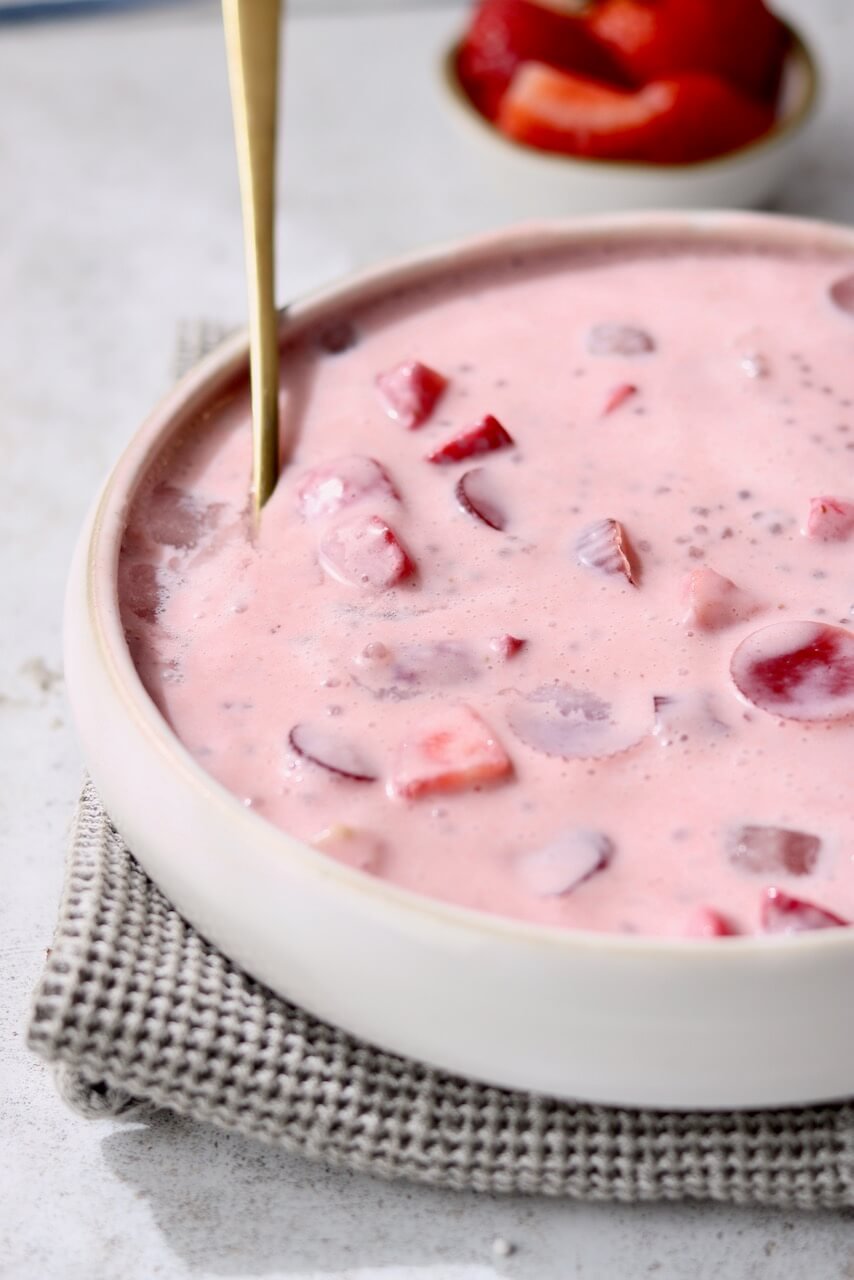


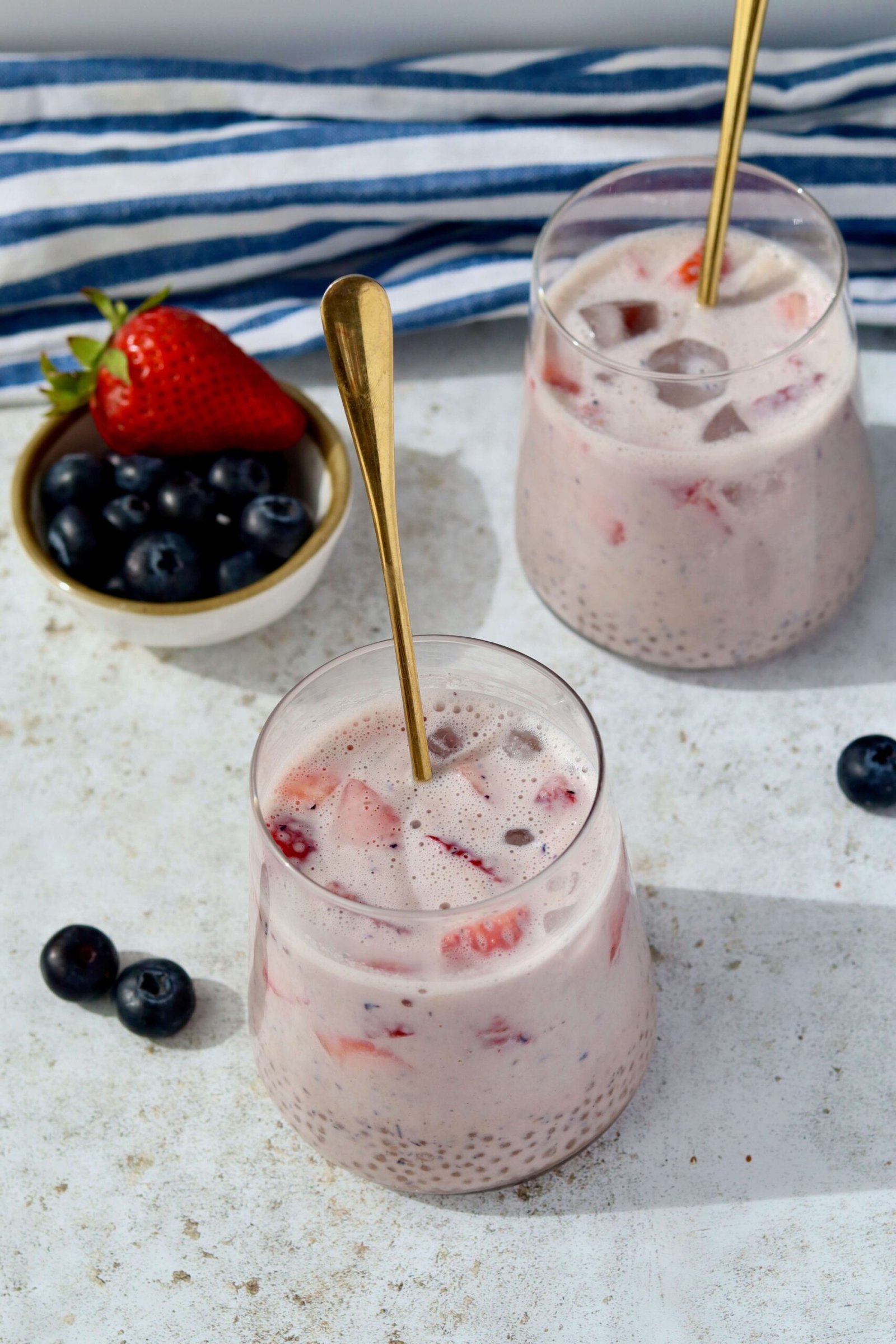
Strawberry Sago is a chilled dessert made with cooked small tapioca pearls blended with Alpro High Protein Red Berries soya yogurt, coconut cream, almond milk, fresh strawberries, a Medjool date, and vanilla extract. This strawberry sago recipe serves 2, takes under 20 minutes to prepare, and provides approximately 256 kcal and 9g of plant-based protein per serving.
If you have never tried sago before, this strawberry sago recipe is the perfect place to start. Soft, translucent small tapioca pearls in a creamy, strawberry-kissed coconut base, chilled until cold and perfectly smooth. It is the kind of perfect dessert that tastes far more indulgent than its ingredient list suggests, and one of those sago recipes that genuinely surprises people the first time they try it. As a certified nutrition coach, I love finding desserts that deliver real pleasure without compromise and at under 260 kcal per serving with 9g of plant-based protein, this one earns its place in any balanced week.
In this post you’ll learn:
- The difference between sago and tapioca and why it matters for this strawberry sago recipe
- Why coconut cream and Alpro High Protein yogurt make such a perfect pairing
- The best variations for making this ahead of time for an effortless chilled dessert
For more high-protein ideas, browse the full High-Protein Recipes roundup →
Sago vs Tapioca, What’s the Difference?
This is worth addressing because the two are used almost interchangeably in sago recipes, and the distinction is genuinely interesting. Sago comes from the pith of the sago palm, a tropical tree found across Southeast Asia and the Pacific. Tapioca comes from cassava root, a starchy tuber native to South America. Despite being from completely different plants, both are processed into small tapioca pearls that behave almost identically when cooked becoming soft, translucent, and slightly chewy with a neutral flavour that takes on whatever liquid they are cooked in.
In practice, the terms are used interchangeably in most English-language sago recipes and supermarkets, and the pearls are essentially indistinguishable once cooked. This strawberry sago recipe uses small tapioca pearls, which are the most widely available option in UK supermarkets but if you find sago pearls, they work in exactly the same way with the same cooking time. Both are naturally gluten-free and vegan, making them a brilliant base for dairy-free desserts like this one. Other popular variations you may have seen include mango sago, coconut jellies with tapioca, and taro sago, all built on the same simple small tapioca pearl base.
Why This Strawberry Sago Recipe Works
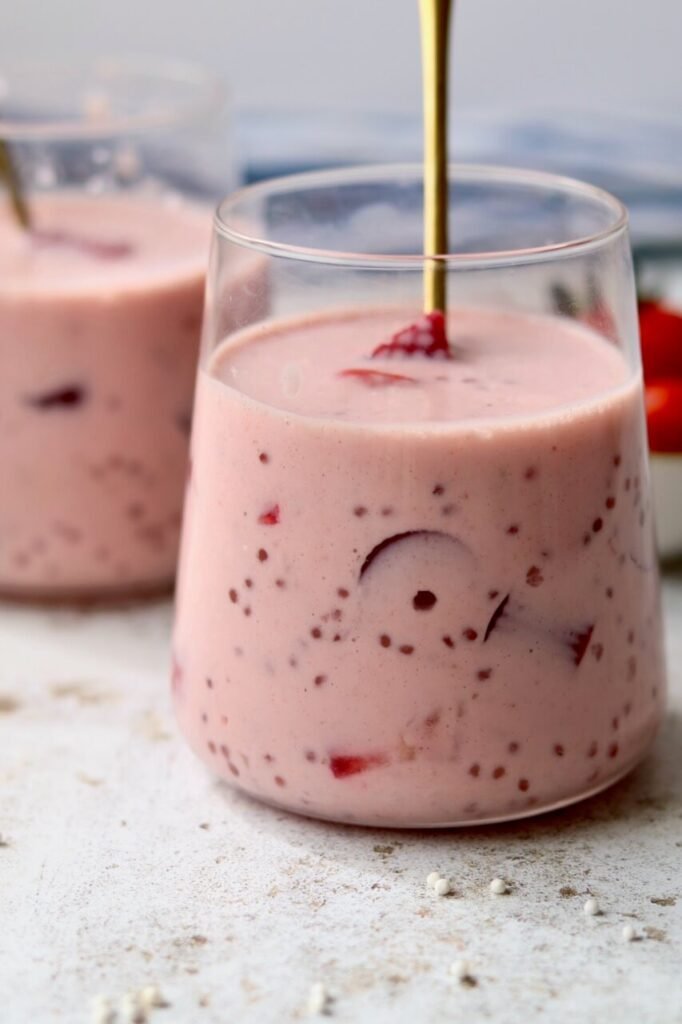
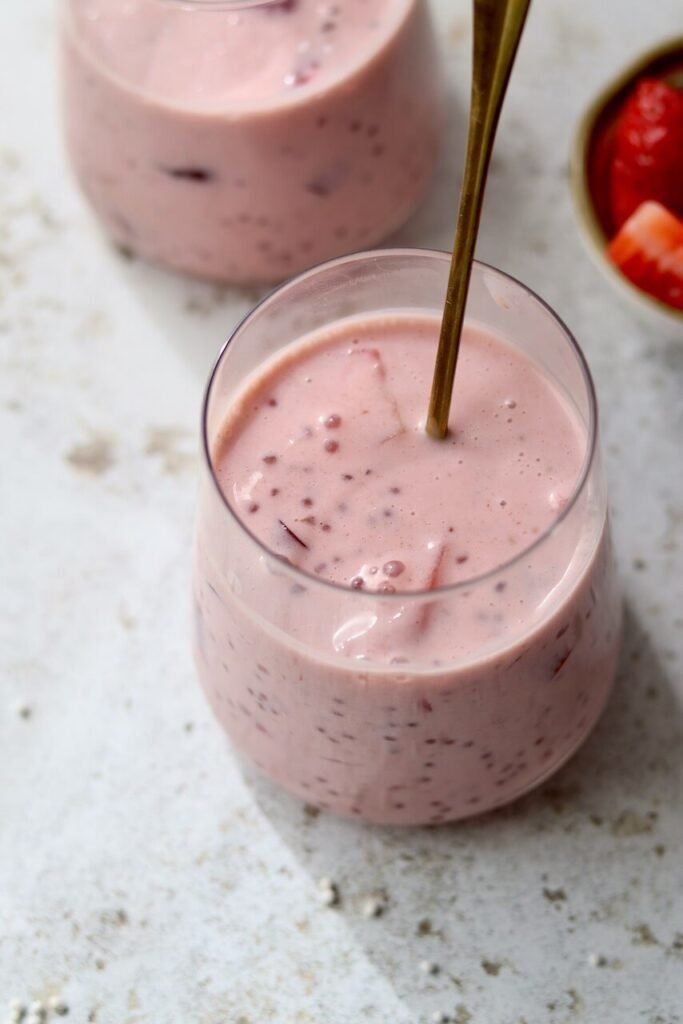
The magic of this strawberry sago is the layering of creaminess. Alpro High Protein Red Berries soya yogurt provides 15g of protein per 200g pot alongside a natural strawberry and berry flavour that runs all the way through the cream base. Coconut cream adds richness and that unmistakable tropical depth that makes sago recipes so comforting. The almond milk loosens everything to the right consistency, silky and pourable rather than thick and heavy.
Blending half the fresh strawberries directly into the strawberry mixture rather than just using them as a topping is what makes this strawberry sago recipe genuinely special. The blended strawberries give the base a beautiful natural pink colour and a bright, fresh flavour that no artificial flavouring could replicate. The remaining strawberries are kept whole and stirred through at the end, giving you bursts of fresh fruit in every spoonful alongside the soft, chewy small tapioca pearls.
The Medjool date blended into the strawberry mixture adds a natural, caramel-like sweetness without any refined sugar. One date across two servings is a very light touch, enough to round out the flavour without making it sweet in the way a traditional dessert might be. The result is a perfect dessert that feels indulgent but is built entirely on whole food, plant-based ingredients. For more creative dairy-free dessert ideas, take a look at my dairy free dessert recipes.
Nutrition Breakdown
(Per serving — 1 of 2)
- Calories: ~256 kcal
- Protein: ~9g
- Carbohydrates: ~31g
- Fat: ~7.6g
- Fibre: ~3g
At under 260 kcal with 9g of plant-based protein, this strawberry sago is a genuinely well-rounded perfect dessert. The protein comes primarily from the Alpro High Protein soya yogurt, which uses both soya protein isolate and faba bean protein, delivering a complete amino acid profile from entirely plant-based sources. The natural sugars come from the strawberries, Medjool date, and yogurt rather than any added refined sugar.
Coaching insight: For a dessert that genuinely satisfies a sweet craving, this strawberry sago recipe is about as nutritionally complete as it gets. The protein and fibre content means it digests slowly and keeps you feeling satisfied rather than reaching for something else twenty minutes later.
Note: All nutrition values are estimates calculated using Alpro High Protein Red Berries Soya Yogurt. Values will vary with different yogurt brands. Always verify with your preferred nutrition calculator.
Ingredients
(Serves 2)
- 3 tablespoons small tapioca pearls (or sago pearls — interchangeable)
- 2 cups hot water, for cooking
- 200g Alpro High Protein Red Berries Soya Yogurt (1 pot)
- 70ml unsweetened almond milk
- 2 tablespoons coconut cream
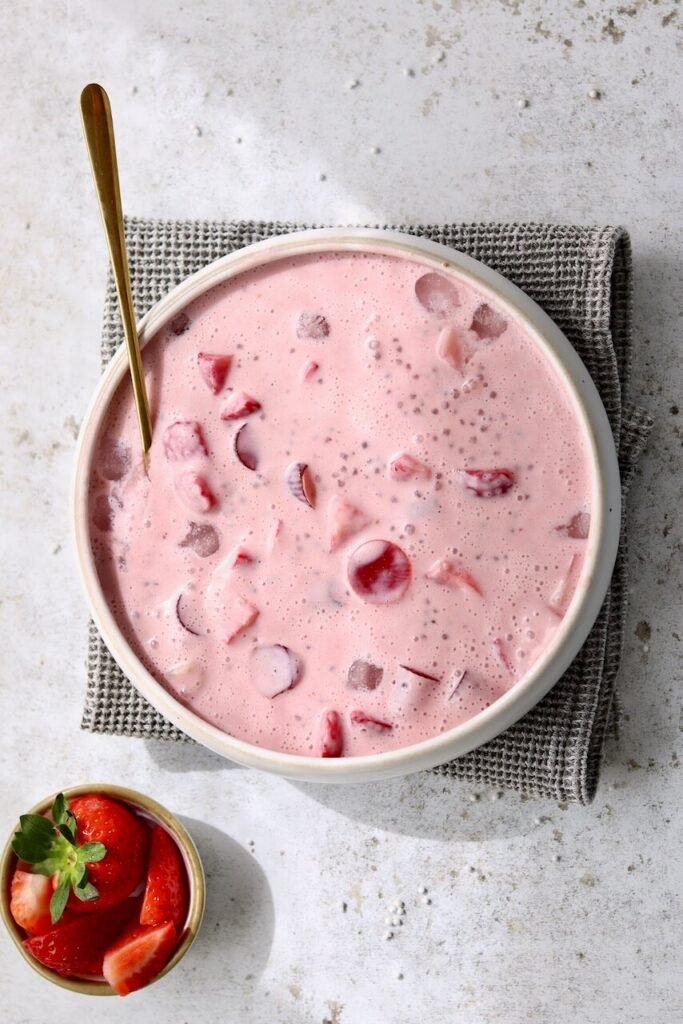
- 200g fresh strawberries, hulled and halved
- 1 Medjool date, pitted
- ½ teaspoon vanilla extract
- Cold water for rinsing
Smart Substitutions
- Alpro High Protein Red Berries: Any high-protein soya yogurt works — vanilla or plain if strawberry isn’t available; check the label as protein content varies significantly between ranges
- Almond milk: Oat milk for creaminess; coconut milk for a richer, more tropical base entirely to your preference
- Coconut cream: Coconut yogurt for a lighter version; omit entirely for a lower-fat result
- Strawberries: Fresh raspberries or mango work beautifully for different variations; frozen strawberries thawed and well-drained also work for the blended strawberry mixture
- Medjool date: 1 teaspoon of maple syrup or agave syrup; adjust to your preference for sweetness
If you’re adjusting based on your goals: omitting the coconut cream saves approximately 49 kcal and 5g of fat per serving; adding half a scoop of vanilla protein powder to the blender when you blend the strawberry mixture adds approximately 15g of protein to the whole batch.

Variations
This strawberry sago recipe is incredibly versatile. Here are some of the best variations to try:
Mango Sago
One of the most beloved variations across Southeast Asian cuisine. Replace the strawberries with fresh ripe mango in both the blended base and the whole fruit stirred through, swap the red berries yogurt for vanilla or plain high-protein yogurt, and add a squeeze of lime juice. The result is a mango sago that is equally beautiful and equally simple to make.
Coconut Jellies and Tapioca
For a more elaborate presentation inspired by classic Asian desserts, add small cubes of coconut jelly to the assembled bowl alongside the small tapioca pearls. Coconut jellies can be made simply by setting coconut milk with agar agar, cutting into cubes, and chilling until firm. A genuinely impressive dinner party perfect dessert.
Tropical Version
Use coconut milk instead of almond milk, increase the coconut cream to 3 tablespoons, and add fresh passion fruit pulp stirred through the assembled bowl just before serving.
Frozen Sago Popsicles
Pour the fully assembled strawberry mixture and tapioca into popsicle moulds before it thickens and freeze for 3–4 hours. For another brilliant frozen dairy-free treat, take a look at my mango mochi recipe.
Extra Indulgent Version
Increase the coconut cream to 3 tablespoons and add a second Medjool date for a richer, sweeter result closer to a traditional Asian coconut sago pudding in character, entirely down to personal preference.
Storage
Store leftovers in an airtight container or jar in the fridge for up to 2 days. The small tapioca pearls will continue to absorb the strawberry mixture as they sit and the sago will thicken considerably, simply stir in a splash of almond milk before serving leftovers to loosen to your preferred consistency.
Where possible, store the cooked small tapioca pearls separately from the blended strawberry mixture in their own airtight container or jar and combine just before serving, this preserves the best texture for leftovers.
Do not leave at room temperature for more than 2 hours as the yogurt base requires refrigeration. Do not freeze the assembled sago, the small tapioca pearls become grainy after thawing. The popsicle variation above is the exception.
How This Fits Into a Balanced Diet
This Strawberry Sago sits at exactly the right intersection of pleasure and nutrition. A perfect dessert under 260 kcal that delivers 9g of plant-based protein from whole food ingredients, natural sweetness from fresh strawberries and a single Medjool date, and the kind of creamy, satisfying texture that makes you feel genuinely treated — that is what balanced, non-restrictive eating looks like in practice.
As a nutrition coach I always encourage people to include dessert in their regular eating rather than treating it as something to earn or limit. When a dessert is built on ingredients like these, soya protein, fresh strawberries, coconut cream, almond milk, it contributes to your nutritional goals rather than working against them.
Final Thoughts
This Strawberry Sago is the perfect dessert to make when you want something that looks and tastes beautiful but takes almost no effort to pull together. Twenty minutes, one blender, a handful of ingredients — and you have two servings of a chilled perfect dessert that genuinely impresses.
Make it the night before, keep leftovers in a jar in the fridge, and pull it out when you need something that feels special without any last-minute work. Subscribe to my blog and get my free weekly meal planner template to build more balanced, indulgent-feeling recipes like this one into your week with ease.
Alex 🙂
Strawberries and Cream Sago (Dairy-Free, High-Protein, Ready in 20 Minutes)
A creamy, chilled strawberry sago made with soft small tapioca pearls in a strawberry coconut cream base, Alpro High Protein Red Berries soya yogurt, fresh strawberries, coconut cream, and a Medjool date blended into a smooth strawberry mixture and combined with chewy pearl sago. Dairy-free, gluten-free, vegan, and under 260 kcal per serving with 9g of plant-based protein. A perfect dessert for warm days.
Ingredients
Instructions
-
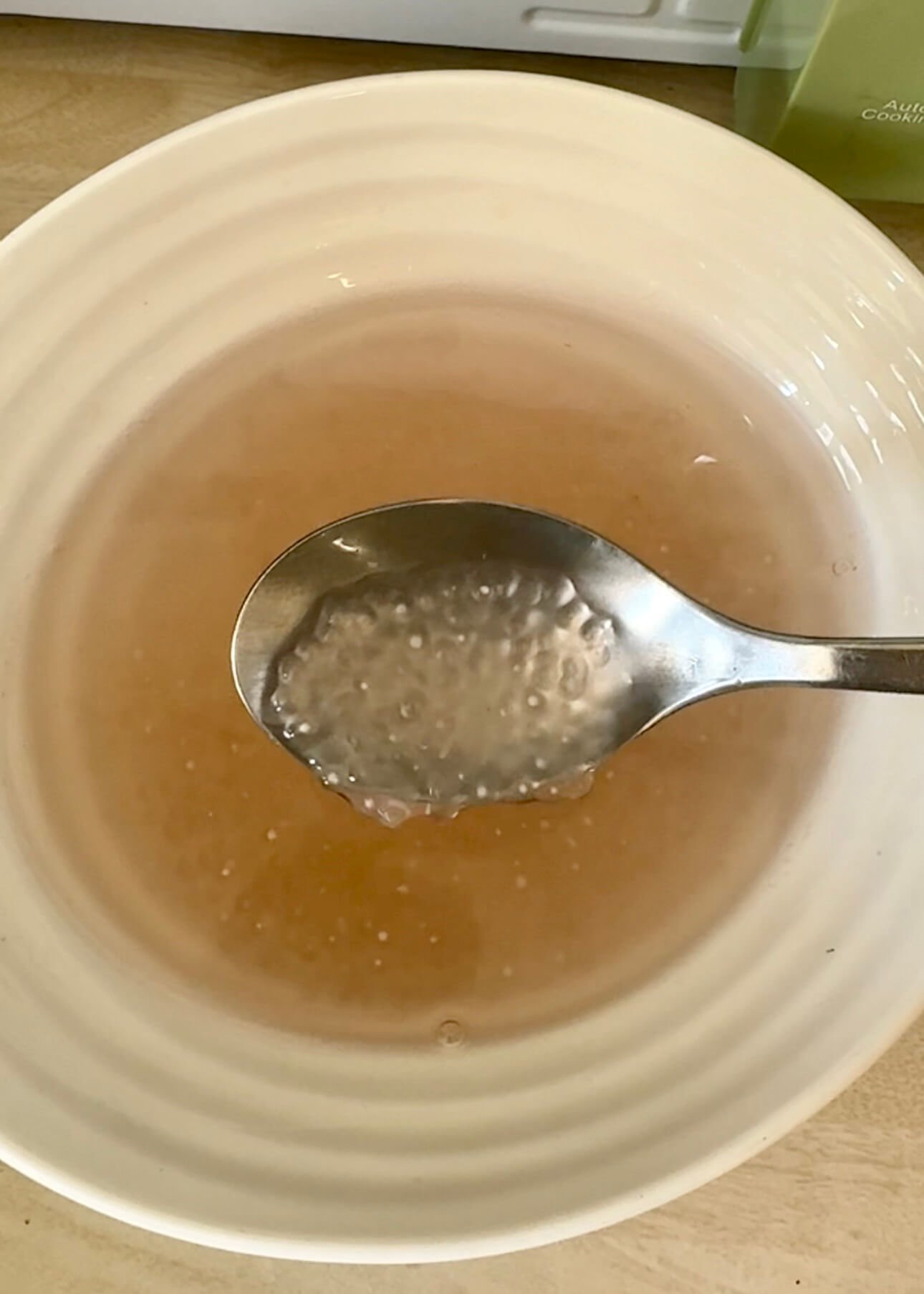
Add small tapioca pearls and hot water to a large microwave-safe bowl. Microwave in 1-minute intervals, stirring between each, until fully translucent, about 5–6 minutes. To boil on the stovetop instead, simmer in hot water for 10–12 minutes until translucent, stirring regularly. Drain through a fine sieve and rinse under cold water. Set aside.

-
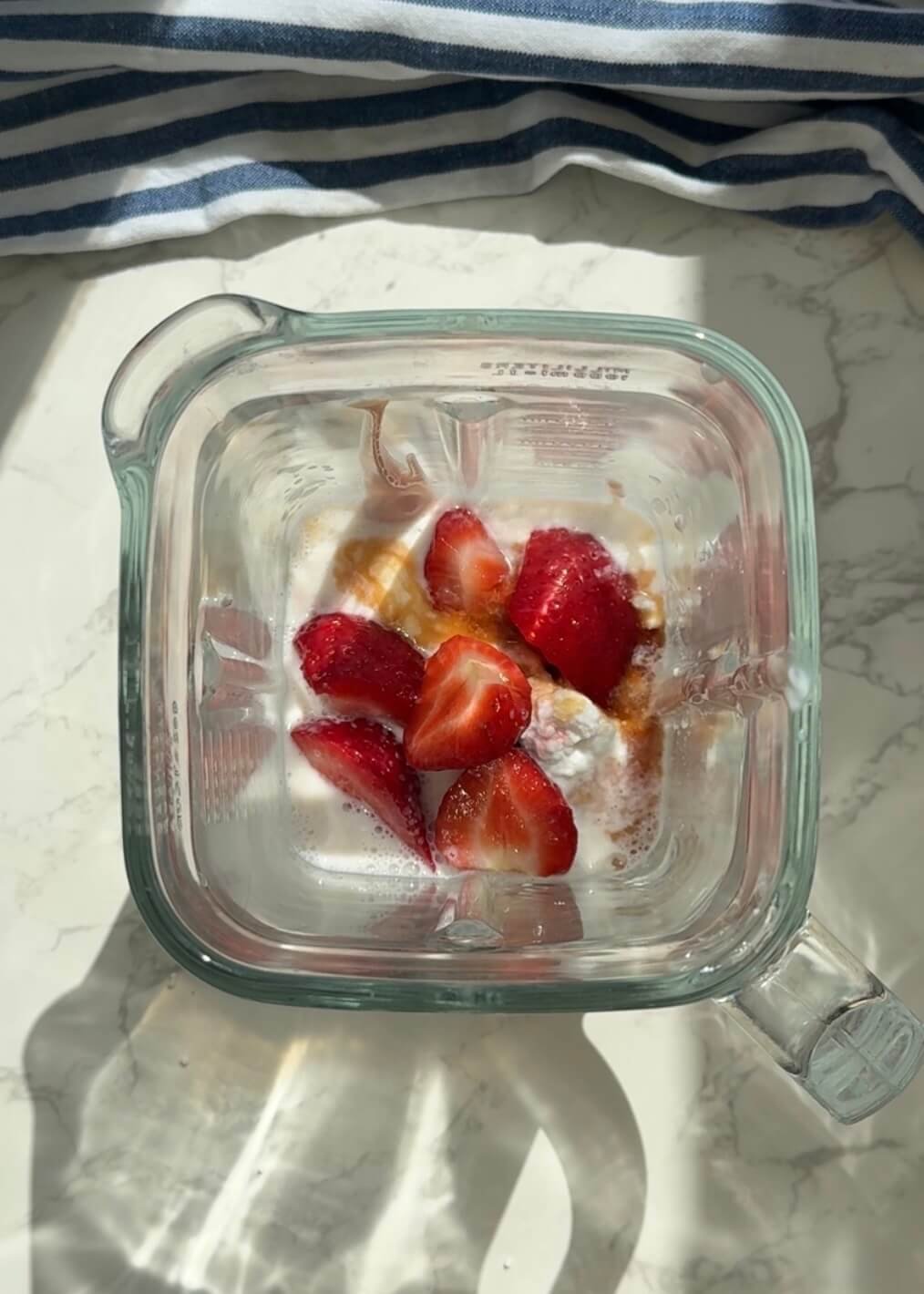
Add the Alpro yogurt, almond milk, coconut cream, Medjool date, vanilla extract, and half the strawberries to a blender. Blend until the strawberry mixture is completely smooth and creamy.
-
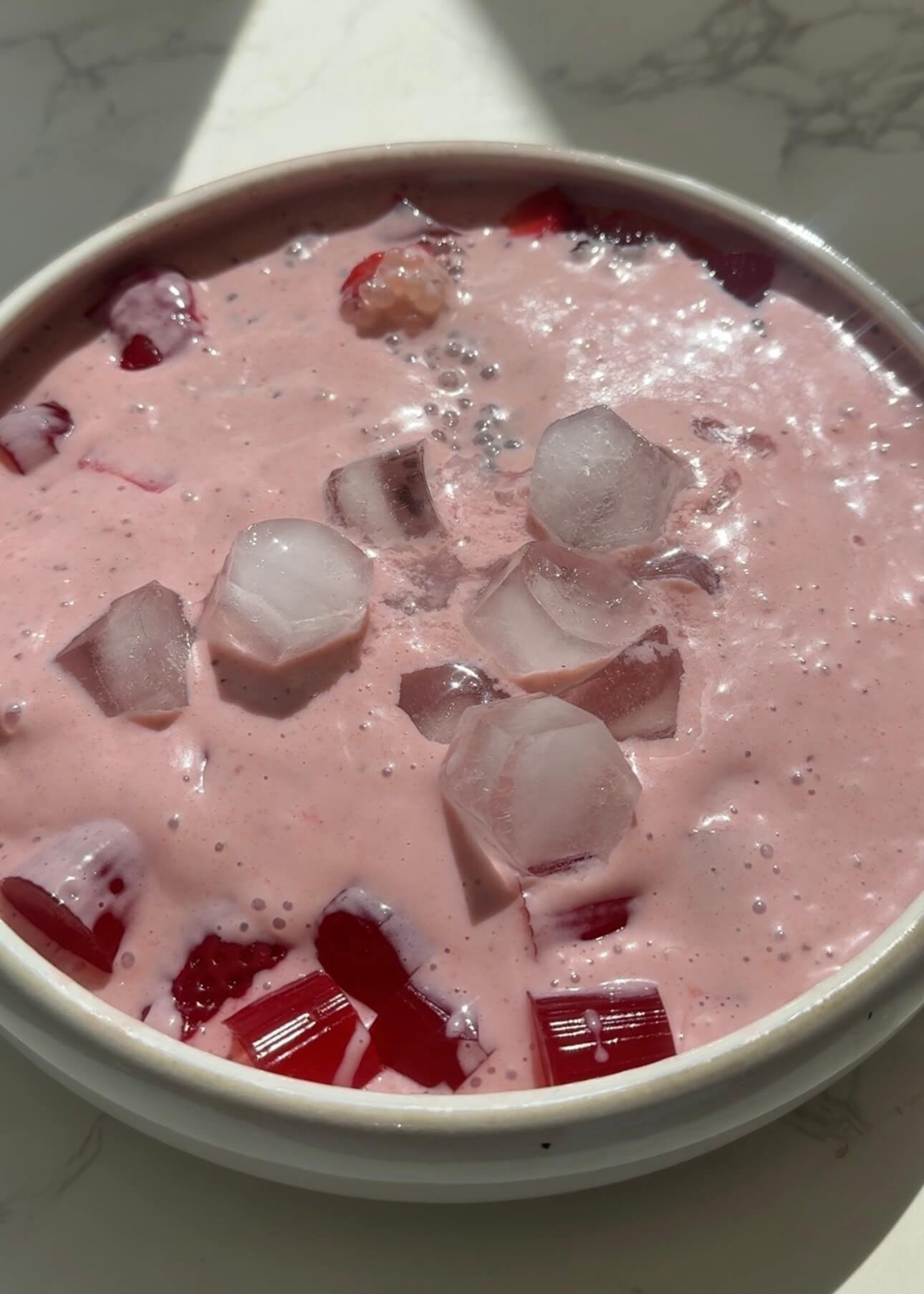
In a large bowl, combine the drained small tapioca pearls, blended strawberry mixture, and remaining fresh strawberries. Mix gently.
-
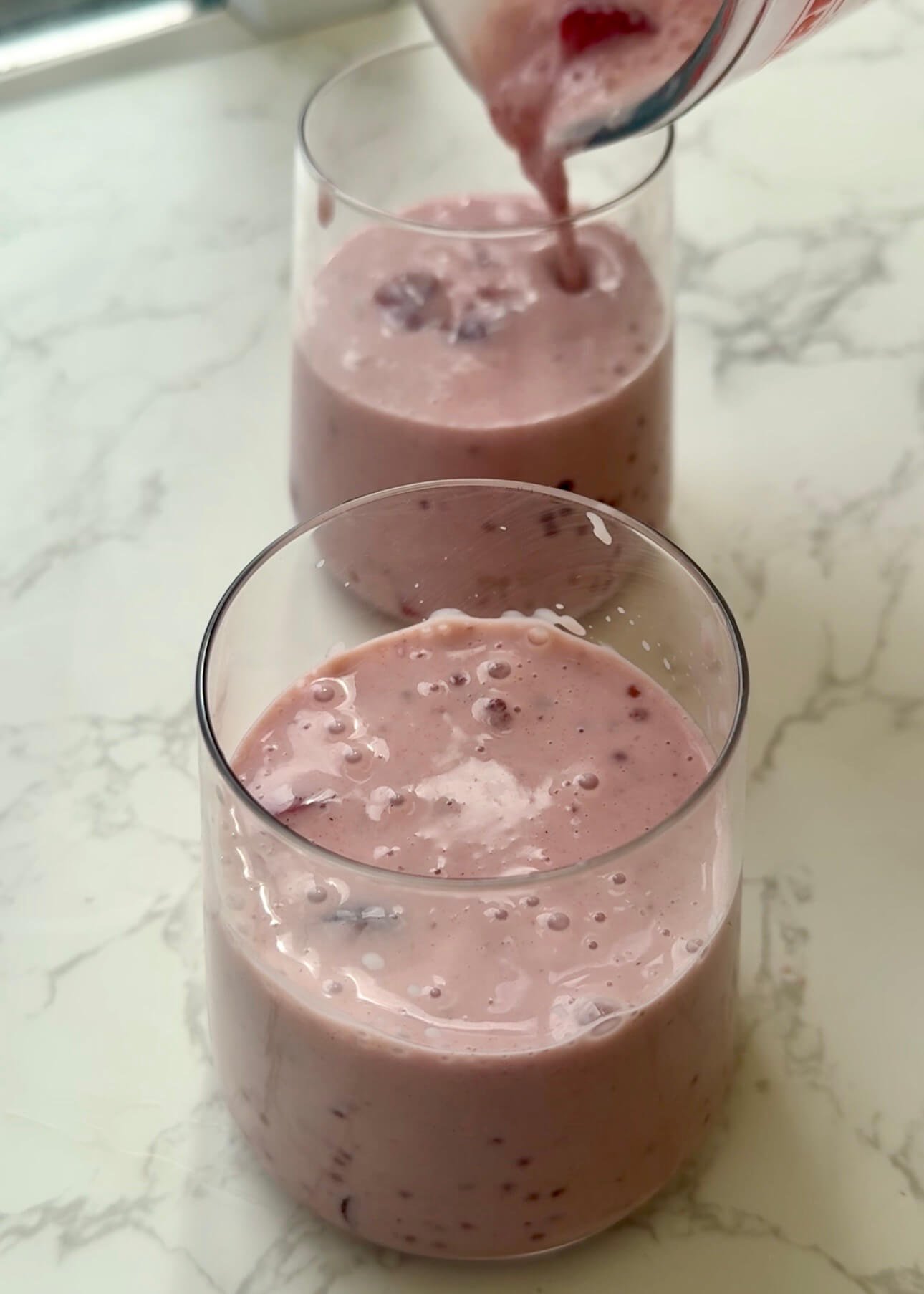
Divide between two serving bowls or glasses. Serve immediately with ice, leave at room temperature for 5 minutes for a slightly softer texture, or refrigerate for 10–15 minutes for a thicker, creamier result.
Nutrition Facts
Nutrition Facts
Servings: 2 ServingCalories:256kcalTotal Fat:7.6gSaturated Fat: 2.8gSodium:90mgTotal Carbohydrate:31gDietary Fiber: 3gSugars: 18gProtein:9g
Note
- Small tapioca pearls and sago pearls are interchangeable in this recipe
- Rinse the cooked pearls under cold water immediately after draining to stop cooking and prevent sticking
- The sago thickens as it sits, stir in a splash of almond milk to loosen leftovers before serving
- Store leftovers in an airtight container or jar in the fridge for up to 2 days
- Store small tapioca pearls separately from the strawberry mixture where possible for the best texture
- Do not leave at room temperature for more than 2 hours
- Do not freeze the assembled sago
- Macros calculated using Alpro High Protein Red Berries Soya Yogurt — values will vary with different brands