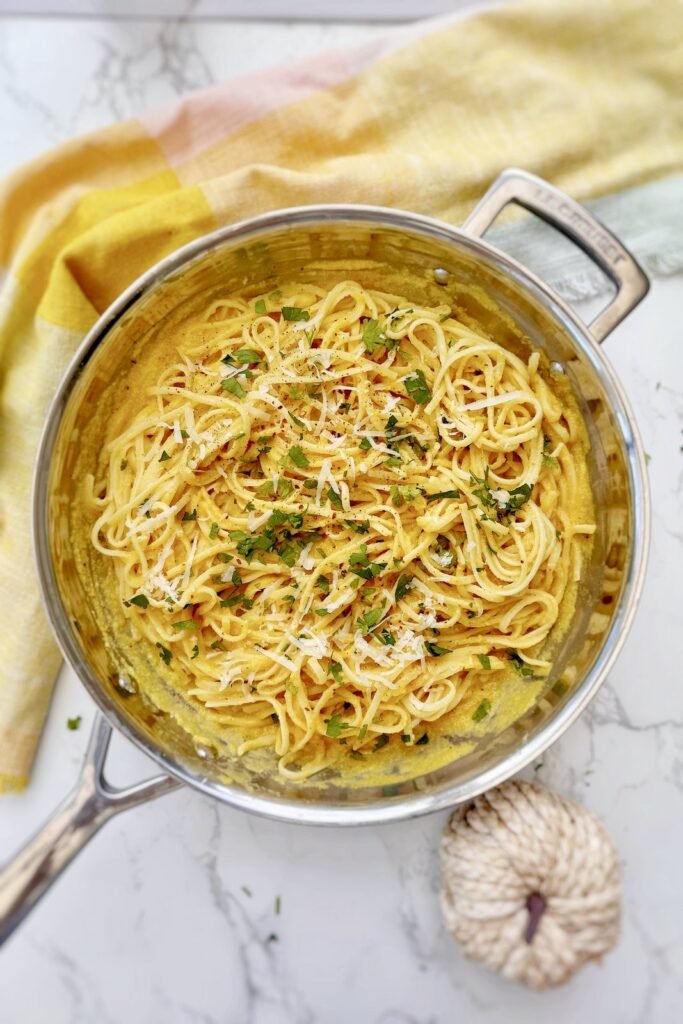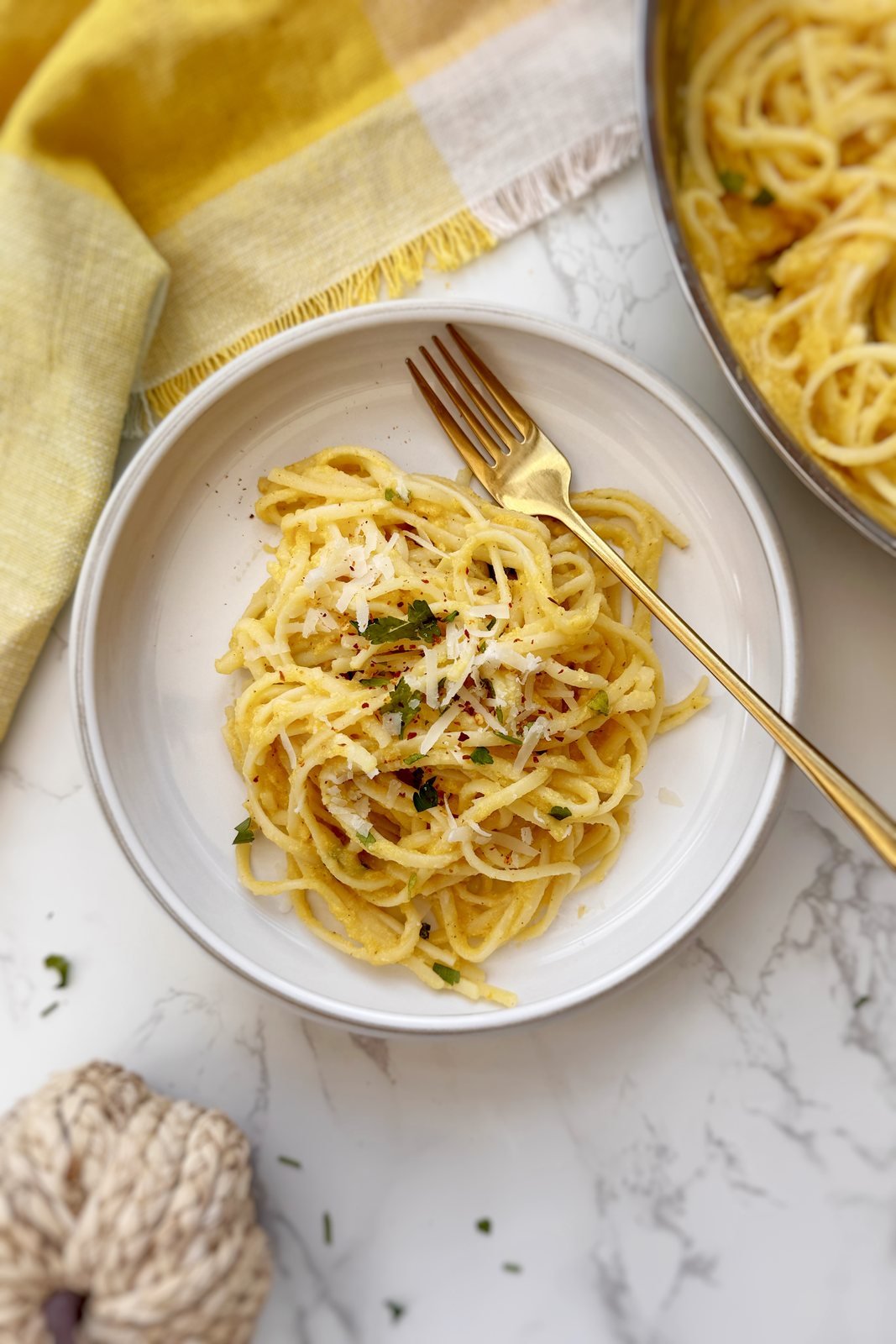


Creamy roasted pumpkin pasta gets its sauce from blended roasted pumpkin and cottage cheese rather than heavy cream, so it comes out silky, savoury and bright orange, with 26g of protein a serving. Roast the pumpkin with onion and whole garlic, blend it smooth with the cheese and a splash of pasta water, then toss it through spaghetti.
Pumpkin season arrives and half the internet reaches for a latte. I’d rather put it in pasta.
Roasting is the whole trick here. Raw pumpkin blended into a sauce tastes flat and faintly vegetal; roasted until the edges catch, it turns sweet and nutty and tastes like it has been cooked down for hours. The cottage cheese then does the job double cream usually does, without the heaviness, and quietly triples the protein while it’s at it.
- 26g protein a serving, from cottage cheese and Parmesan rather than cream
- One blender, one pan, and the oven does most of the work
- The sauce freezes on its own, so it’s worth doubling while pumpkin is cheap
Key ingredients
Pumpkin wants roasting, not boiling. You need about 300g (10.5 ounces), cut into wedges or chunks. Oil it well and give it 25 to 30 minutes until the edges are properly caramelised, because those browned bits are most of the flavour. Butternut squash works identically if pumpkin isn’t around.
Cottage cheese is what makes this creamy without cream. Blended, it goes completely smooth, so nobody will guess it’s in there. Use full-fat for the best texture; the low-fat stuff can come out slightly grainy and needs a little more pasta water to loosen.
Whole roasted garlic is worth the extra minute. Roast the cloves in their skins alongside the pumpkin and squeeze them out afterwards. They turn sweet and mellow, where raw garlic blended into a sauce is sharp and stays sharp.
Pasta water is the ingredient people tip down the sink. The starch in it is what lets the sauce cling to the pasta rather than sliding off. Save half a cup before you drain, and add it a tablespoon or two at a time. Forgot to save any? A splash of vegetable stock or chicken broth will loosen the sauce, it just won’t cling quite as well.
Equipment you’ll need
- Baking tray for roasting the pumpkin, onion and garlic
- Knife and chopping board
- Blender or food processor, for the sauce
- Measuring cups and spoons
- Stainless steel pan for bringing the sauce and pasta together
Storing and using up leftovers
Leftovers keep for 3 days in the fridge in an airtight container. The sauce thickens as it sits, so stir in a splash of water or milk as you reheat it over low heat.
My favourite way to use up leftover cooked pasta is to turn it into a pasta bake. Stir through a handful of spinach, tip it into an ovenproof dish, sprinkle over a little extra Parmesan and bake at 200C / 180C fan for 15 to 20 minutes until golden brown on top. Basically a second dinner for no extra effort.
A coaching note
Pasta gets treated as something to feel guilty about, which I’ve never understood. The thing that usually makes a pasta dish heavy isn’t the pasta, it’s what goes on it. Swap the cream for blended vegetables and cottage cheese and you get the same comfort with a proper amount of protein alongside the carbohydrates, which is what actually keeps you full afterwards. Pumpkin also brings beta-carotene, which the body converts to vitamin A, plus some potassium. The one thing to keep an eye on is sodium, as most of it comes from the Parmesan and cottage cheese, so taste the sauce before you add more salt.
If you like this style of sauce, my creamy butter beans work on the same principle, and the high protein Tuscan chicken pasta is the version for when you want meat in it.
You’ll find the full recipe, US measurements and nutrition in the recipe card below. If you make it, tag me on Instagram or Facebook so I can see your bowls, and save it to Pinterest for next pumpkin season.
Alex 🙂
Creamy Roasted Pumpkin Pasta (High Protein, No Cream)
Pumpkin, onion and whole garlic roasted until caramelised, then blended with cottage cheese and Parmesan into a silky orange sauce and tossed through spaghetti. No heavy cream anywhere, 26g of protein a serving, and the oven does most of the work.
Ingredients
Instructions
-
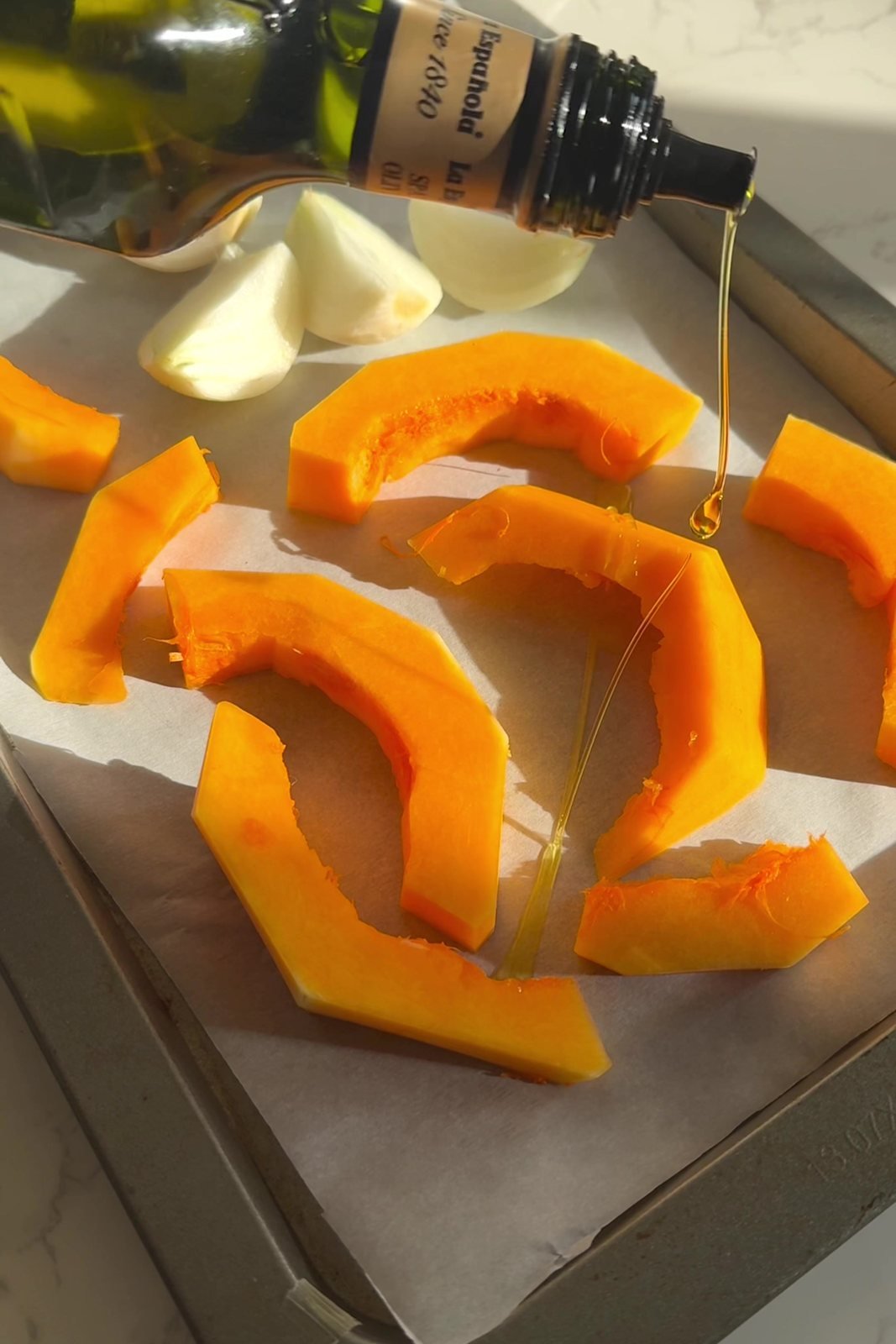
Heat the oven to 200C / 180C fan / 400F. Spread the pumpkin, chopped onion and unpeeled garlic cloves on a lined baking sheet, drizzle with the olive oil and season with the sage, salt and pepper. Roast for 25-30 minutes, until the pumpkin is tender and golden brown at the edges.

-
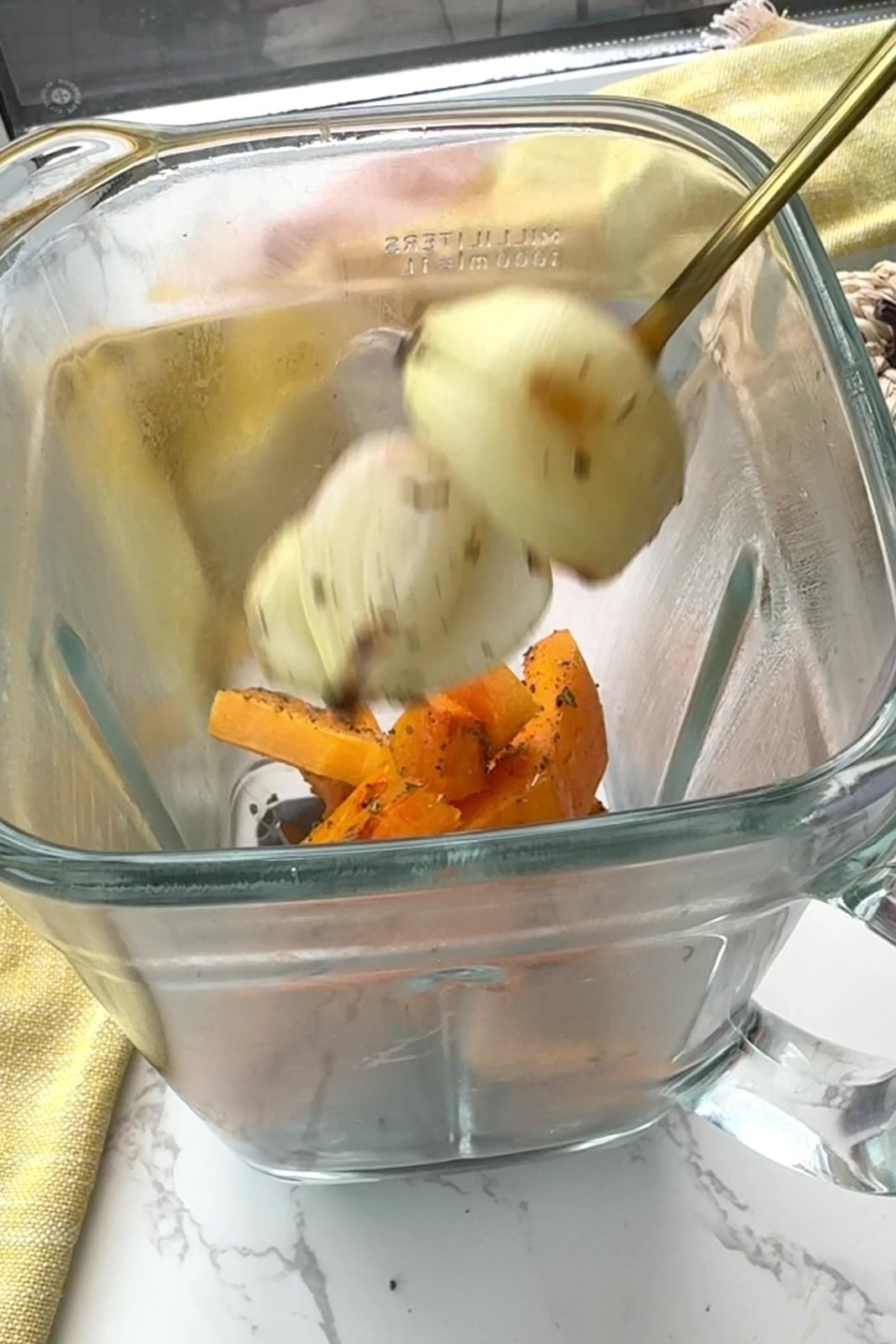
Squeeze the garlic out of its skins. If you roasted the pumpkin in wedges, scoop the flesh away from the skin. Put the pumpkin, garlic and onion into a blender or food processor.
-
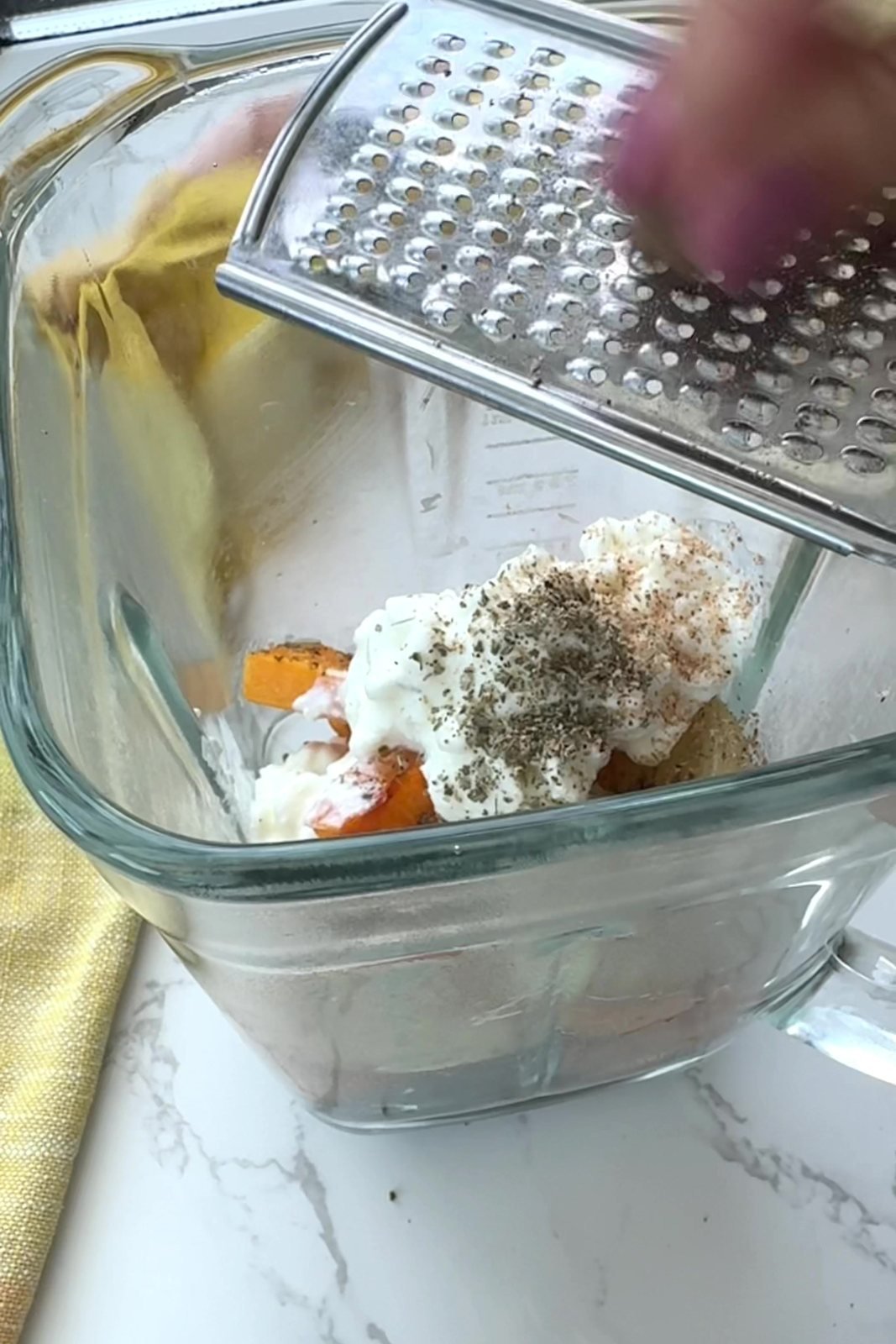
Add the cottage cheese, Parmesan and a pinch of nutmeg. Blend the mixture until completely smooth, adding a splash of water if it's too thick to blend. You'll loosen it properly with pasta water later.
-
Bring a large pan of well-salted water to the boil and cook the pasta until al dente. Reserve half a cup of the pasta water before you drain it, you will want it.
-
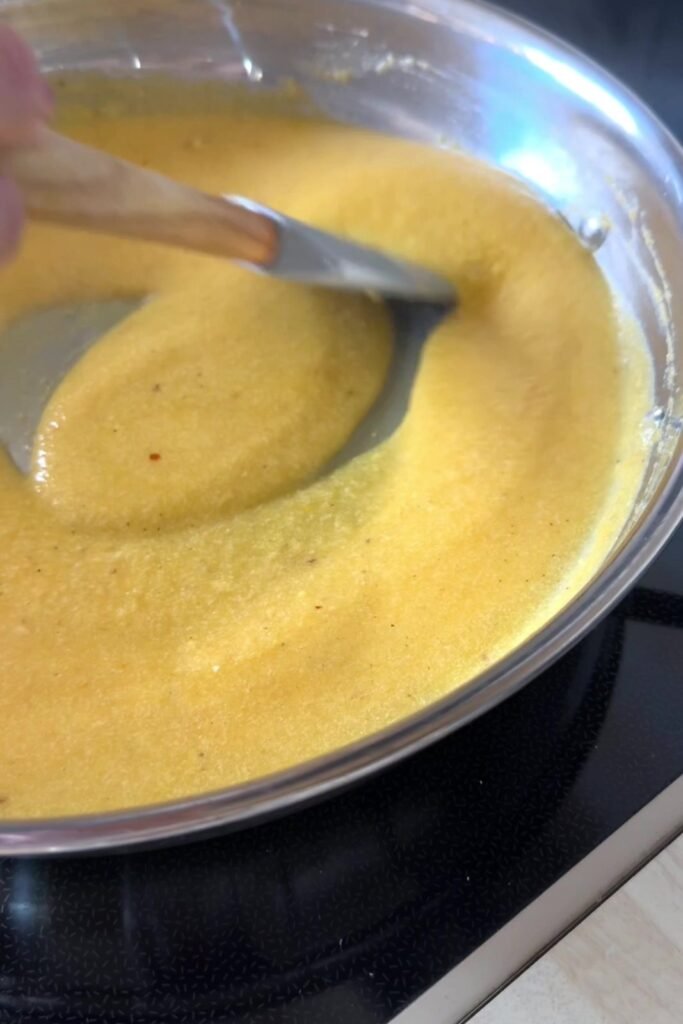
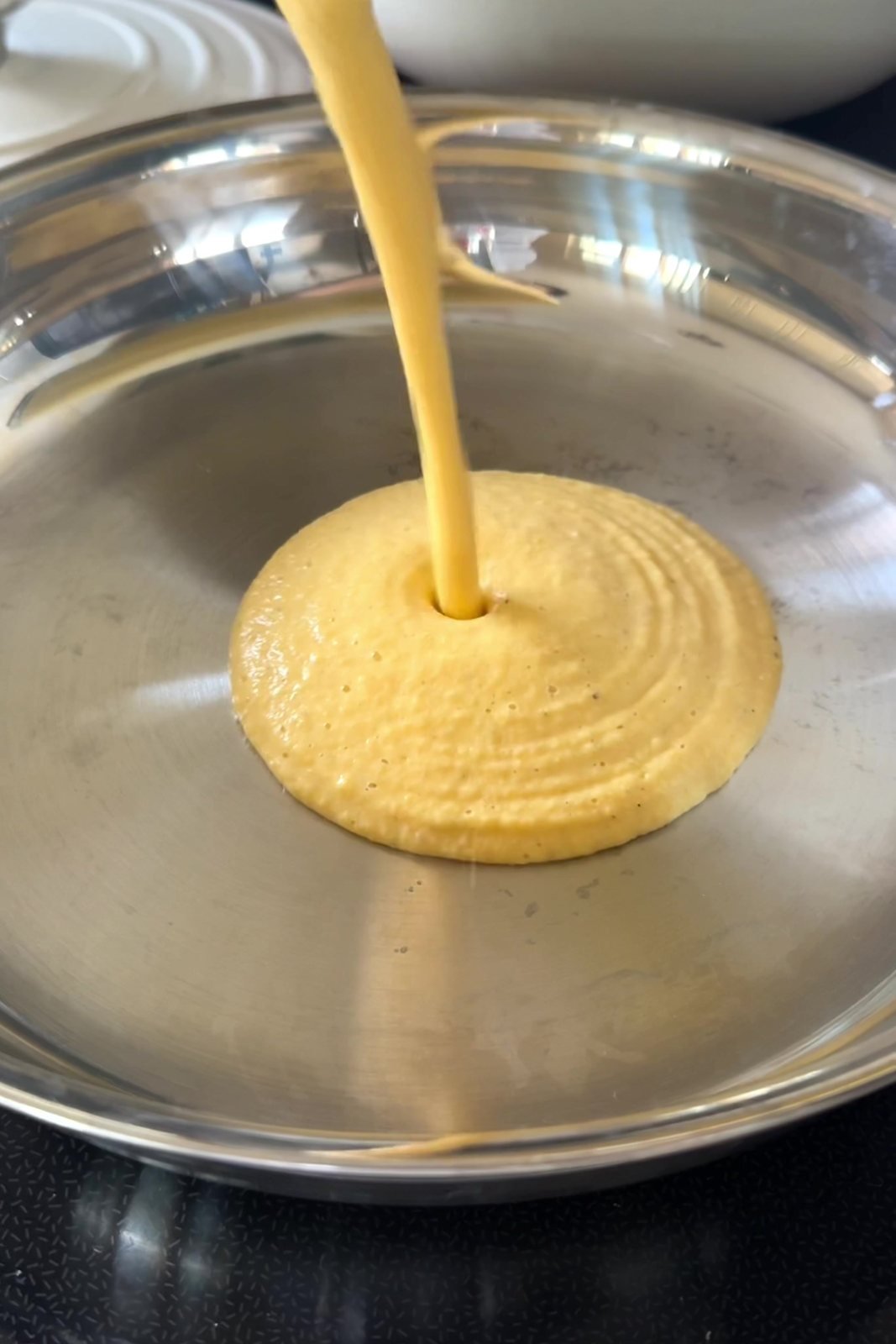
Pour the sauce into a wide pan over low heat and warm it through, stirring. Loosen with more pasta water a splash at a time until it coats the back of a spoon. Taste and season.
-
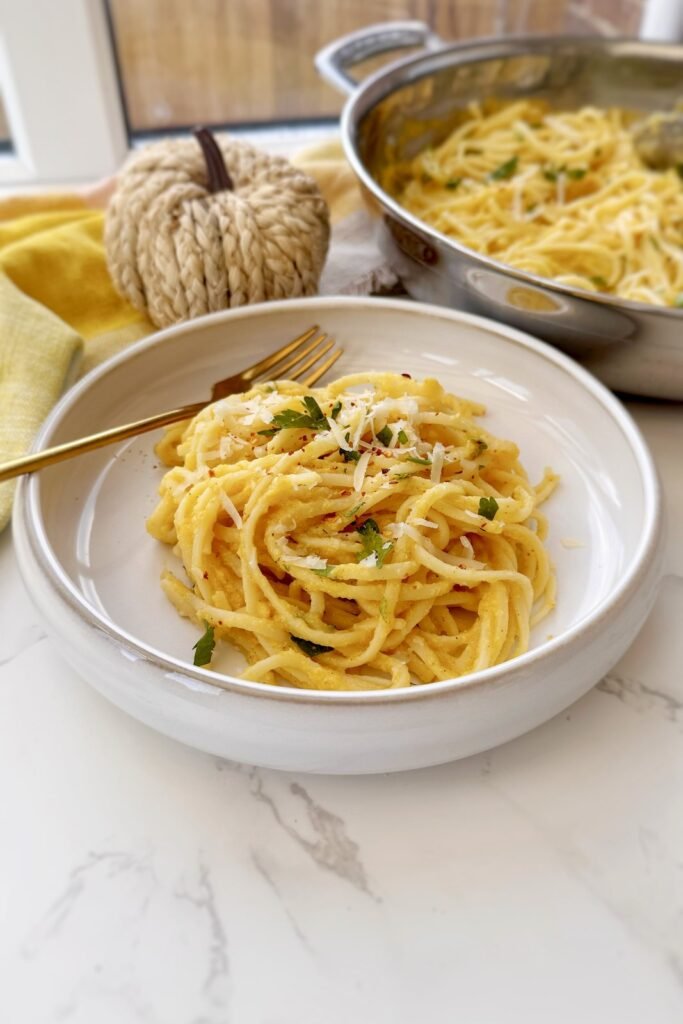
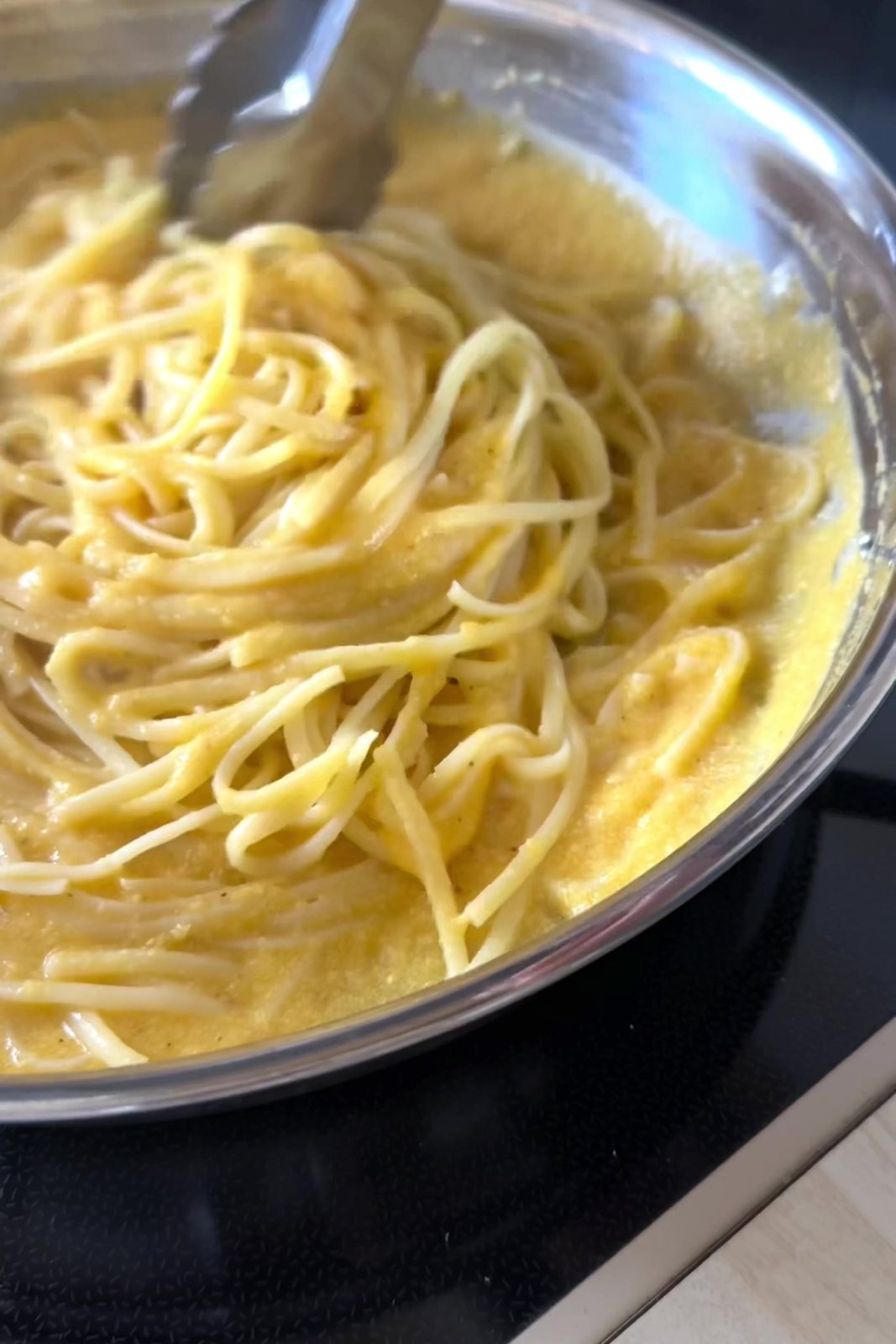
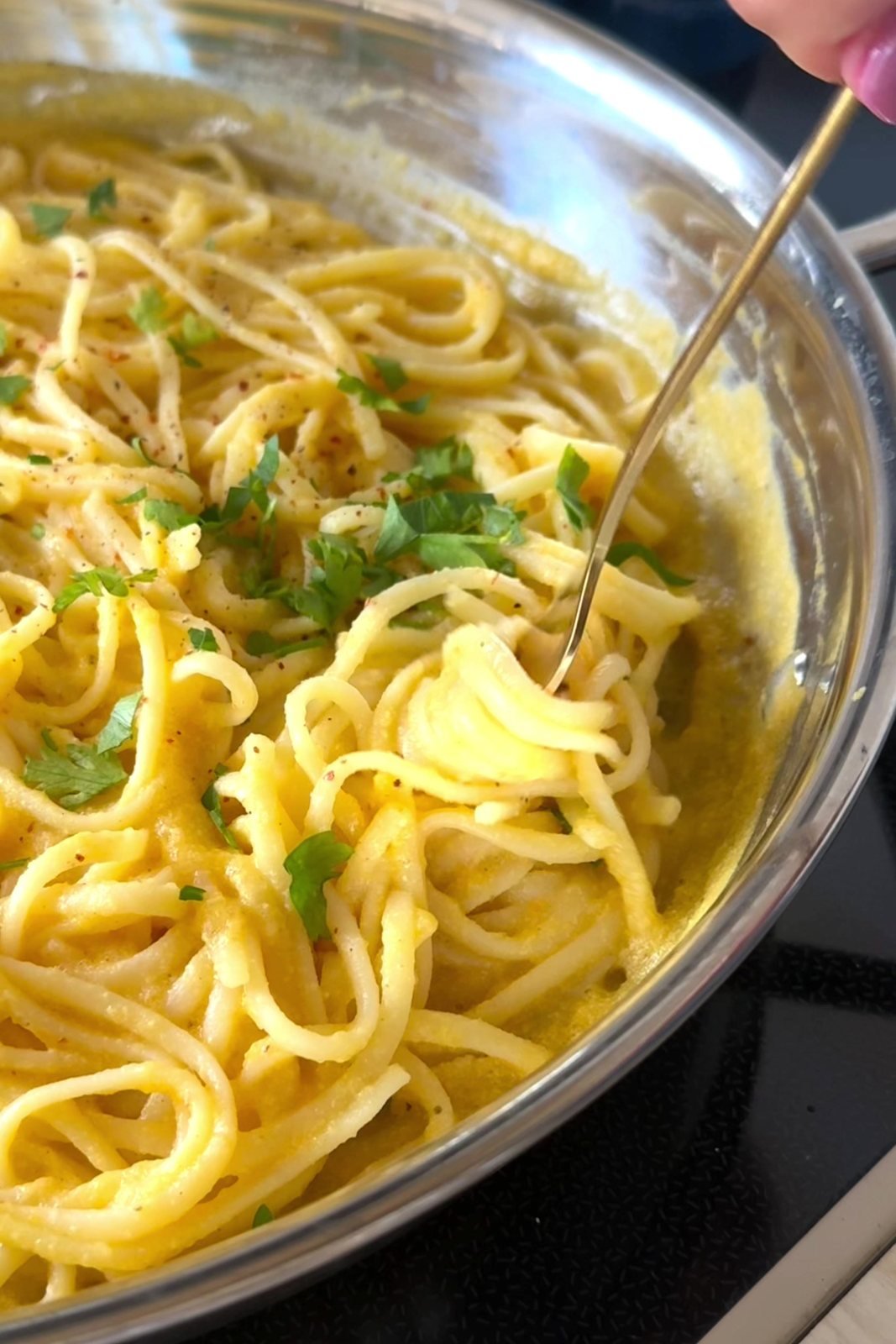
Add the cooked pasta and toss until every strand is coated. Serve with fresh parsley or basil, sprinkle over a little more Parmesan and finish with a drizzle of olive oil. Crispy sage leaves on top are lovely if you have fresh sage (see the notes).
Nutrition Facts
Nutrition Facts
Servings: 3 ServingCalories:530kcalTotal Fat:16gSaturated Fat: 5.3gSodium:700mgTotal Carbohydrate:70gDietary Fiber: 4gSugars: 6gProtein:26g
Note
- Roast the pumpkin until the edges genuinely catch, pale roasted pumpkin makes a flat sauce
- Save half a cup of pasta water before draining. The starch is what makes the sauce cling
- Full-fat cottage cheese blends smoother than low-fat, which can come out slightly grainy
- Traditional Parmigiano Reggiano is not vegetarian, so use a vegetarian hard cheese if that matters
- The sauce freezes on its own for up to 3 months; freeze it rather than the finished pasta
- For crispy sage leaves, fry a handful of fresh sage leaves in a tablespoon of olive oil over medium heat for 30 to 60 seconds, until they stop sizzling, then drain on kitchen paper
- Nutrition includes the Parmesan. Leaving it out takes off roughly 65 kcal and 6g protein a serving. Values are estimates