
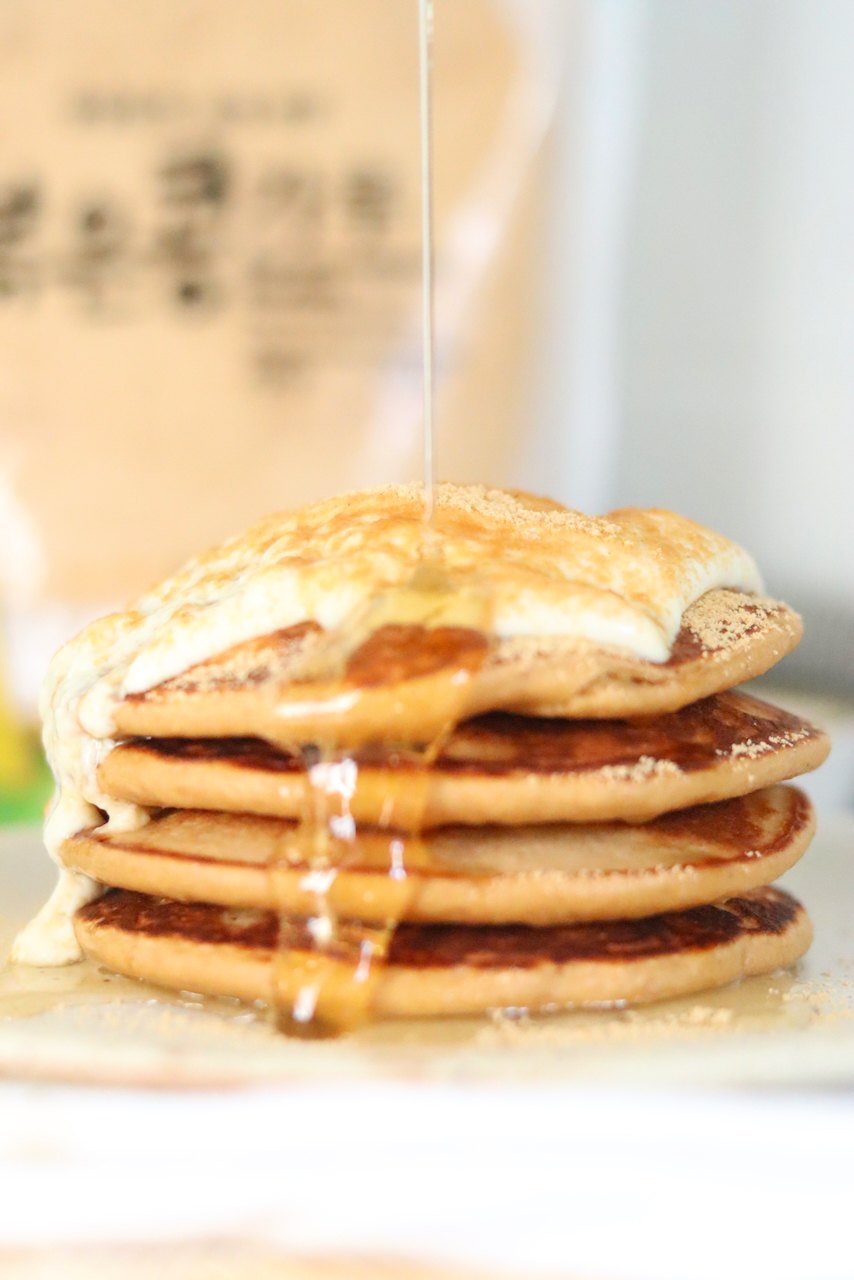


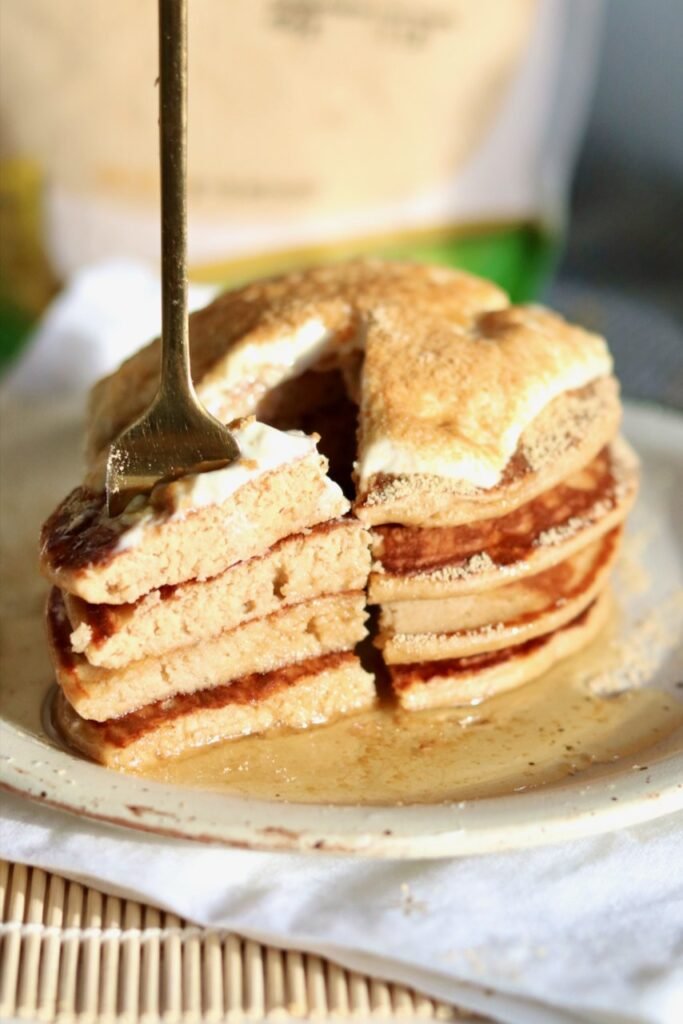
Konggaru pancakes are soft oat flour pancakes made with konggaru, Korean roasted soybean powder, plus Greek yogurt and eggs, so a stack of four gives you 39g of protein. They taste toasty and nutty, a bit like peanut butter, and you finish them injeolmi style with yogurt, honey and a snowy dusting of more konggaru.
I love pancakes, and when I found out about konggaru I knew I wanted to give them a twist, like the traditional injeolmi rice cakes but in pancake form. Sweet and delicious with a nutty flavour, they help with protein intake and taste more like a treat, but they’re on the healthier side. If you are looking to add exciting new flavours to your pantry, I would recommend this.
What I use
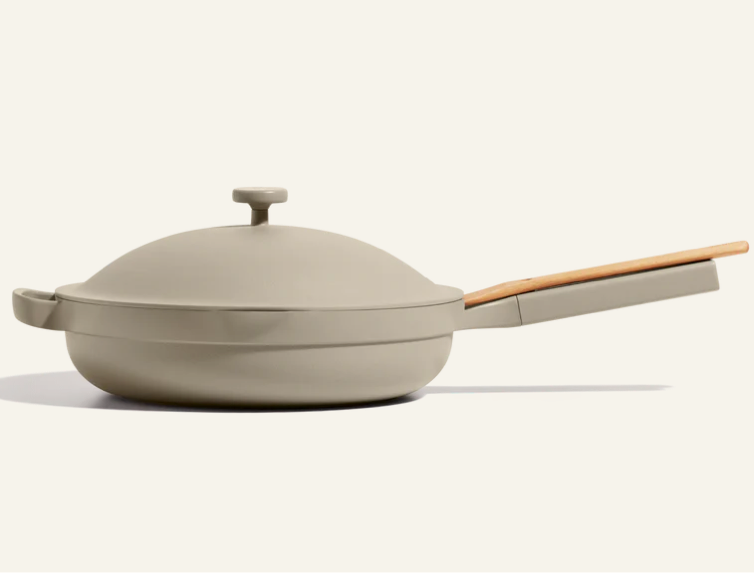
 Always Pan: The pan I use every day. Nothing sticks, so it flips cleanly.
- Whisk set: For a smooth, lump-free mix.
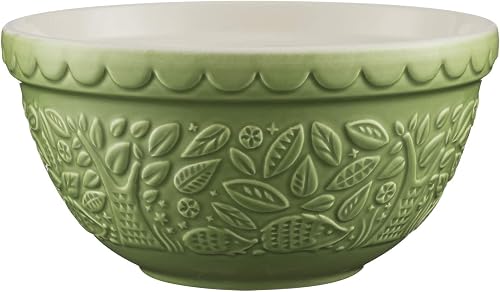
- Mixing bowl: My go-to mixing bowl.

Contains affiliate links. I may earn a small commission at no extra cost to you.
Here’s what you get:
- Sweet Korean pancakes that taste like dessert and double as protein pancakes with Greek yogurt
- An easy first roasted soybean powder recipe if the bag is new to your cupboard
- One bowl, one pan and no protein powder
What is konggaru (Korean roasted soybean powder)?
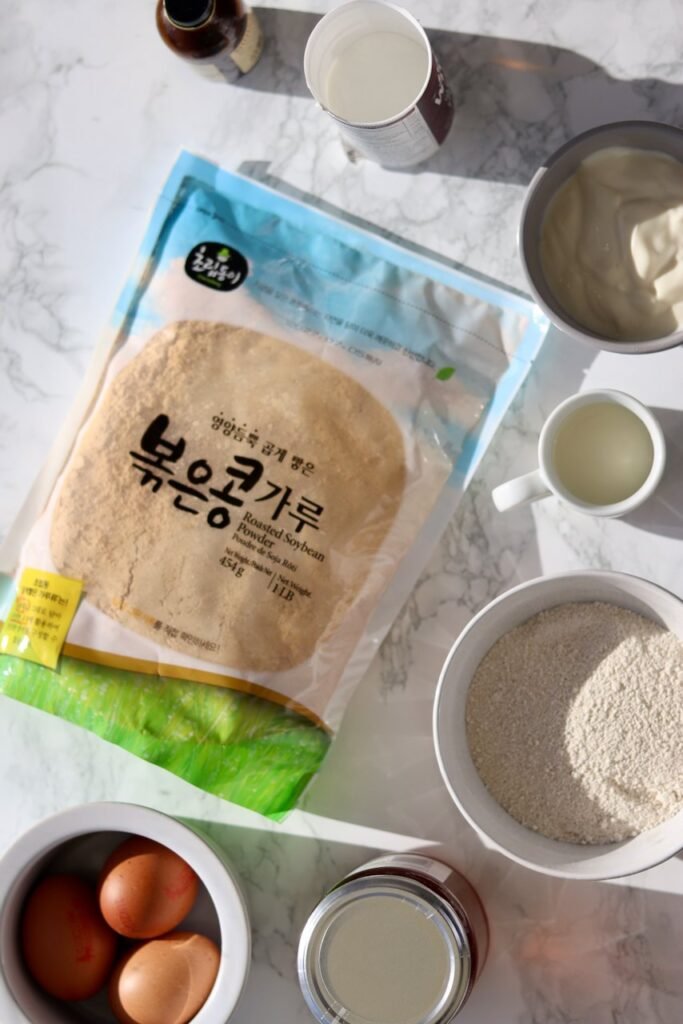
Konggaru (콩가루) is soybeans roasted and ground into a fine golden flour, so you’ll also see it sold as roasted soybean flour or roasted soy flour. It smells like toasted nuts, tastes a bit like peanut butter and has no added sugar. In Korea it coats injeolmi rice cake and gets heaped onto bingsu, and it’s the Korean cousin of Japanese kinako, so these work as kinako pancakes too. I use Choripdong Roasted Soybean Powder from Starry Mart, a Product of Korea, and per 100g it carries 35.5g protein and 17g fibre, so a spoonful does more than add flavour.
The key ingredients for konggaru pancakes
Konggaru gives the batter its toasty, nutty taste and a little extra protein, and any brand of Korean roasted soybean powder works the same way. Plain raw soy flour isn’t a swap, though, as soy flour pancakes made with it taste beany rather than toasty.
Oat flour keeps the pancakes soft and tender. I use gluten free oat flour, and regular oat flour pancakes work just as well if gluten isn’t a concern for you.
Fat free Greek yogurt goes in the batter and on top, adding protein and a fluffy, tangy contrast, like the best Greek yogurt protein pancakes.
Eggs and honey do the rest. Three eggs hold everything together, and honey sweetens the batter and helps the golden colour, with chicory syrup as a lower sugar swap.
Coaching note: low heat and a lid
Konggaru browns fast, and so does honey, so these want low heat and a bit of patience. I cover the pan for the first side, which lets the middle cook through before the outside goes too dark, then flip and finish uncovered. Keep the batter thick enough to ribbon off the spoon. If it pours like crepe batter, the pancakes spread thin and lose their fluffiness. A serving is 590 calories with 39g protein, so it keeps you going properly, and most of the sugar is the honey on top, so go lighter there if you like.
If pancakes are your love language too, try my pear tarte tatin pancake, tiramisu pancake or pumpkin protein pancakes, and there’s plenty more in my high protein recipes.
This post is sponsored by K-Food. All opinions, recipe tweaks and pancake flips are my own.
Alex 🙂
Alexarciab's Healthy Eating Club
Made this recipe? Come and show me!
Join my free community to share what you've cooked, ask me anything about swaps and protein, and see new recipes first.
Join the club, it's freeKonggaru Pancakes (Korean Roasted Soybean Powder, 39g Protein)
Fluffy konggaru pancakes made with Korean roasted soybean powder, oat flour and Greek yogurt, then topped injeolmi style with yogurt, honey and more konggaru. Nutty, toasty and 39g protein a serving, they're a Korean sweet pancake recipe with a protein boost and a lovely way to try a new ingredient.
Ingredients
Batter
Topping
Instructions
-
Add the oat flour, konggaru, baking powder and salt to a large mixing bowl and stir to combine.

-
Crack in the eggs, then add the Greek yogurt, almond milk, honey and vanilla.
-
Whisk until smooth and thick. Rest for 5 minutes, adding a splash more milk if the batter is too thick to pour.
-
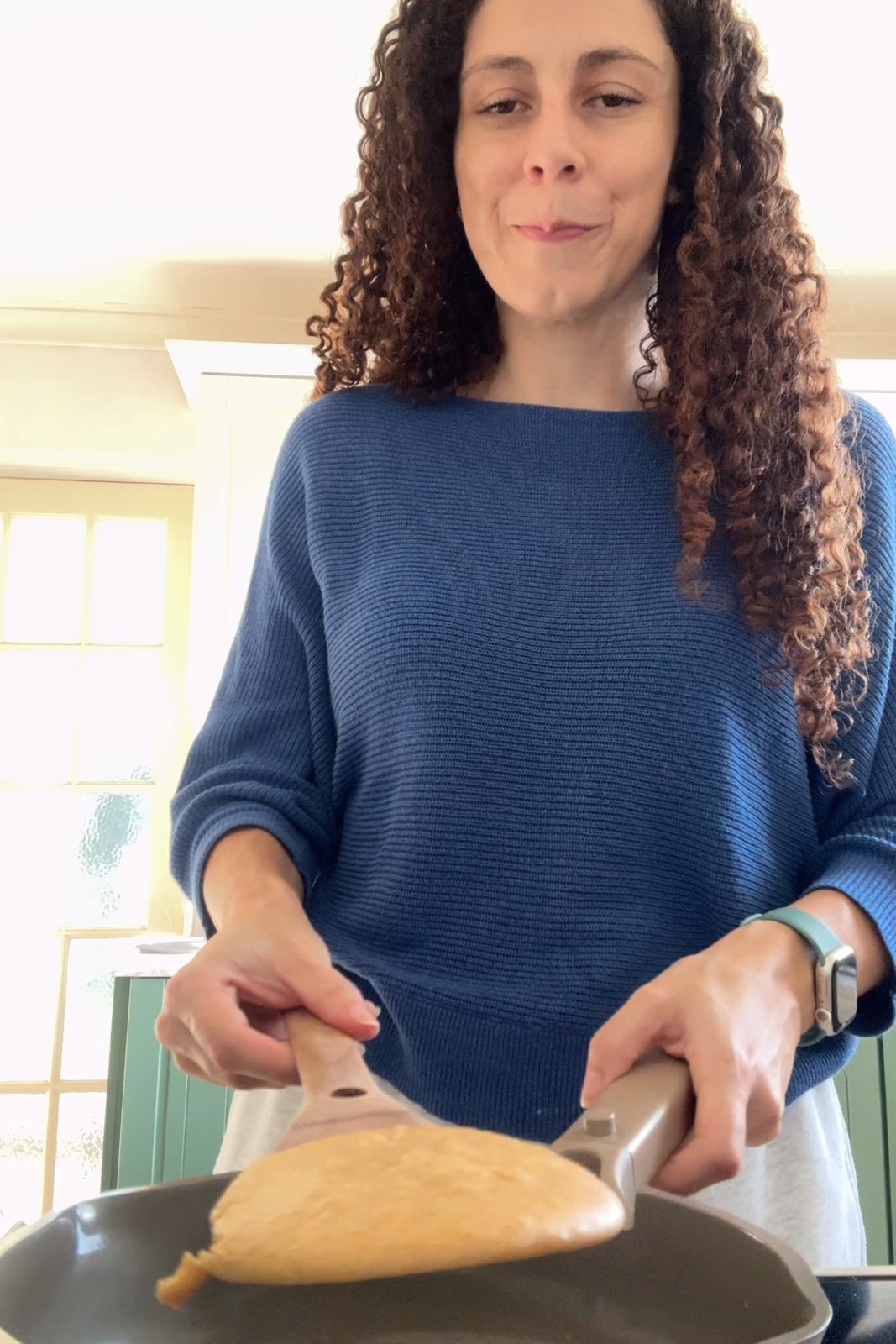
Heat a lightly greased non-stick pan over medium-low heat. Pour about 1/4 cup (3 to 4 tablespoons) of batter per pancake, 3 pancakes at a time, and gently swirl each into a round.
-
Cover with a lid and cook for about 3 minutes, until bubbles appear and the edges look set. Konggaru and honey both brown quickly, so keep the heat low.
-
Flip and cook uncovered for another 2 minutes.
-
Move the pancakes to a plate and repeat with the rest of the batter, greasing the pan as needed. You'll get about 8 pancakes in 3 batches.
-
Stack 4 pancakes per plate, spoon the Greek yogurt over the top and drizzle with honey.
-
Dust generously with konggaru through a small sieve, and scatter over sesame seeds if using.




Nutrition Facts
Nutrition Facts
Servings: 2 ServingCalories:590kcalTotal Fat:18.1gSaturated Fat: 3.7gSodium:460mgTotal Carbohydrate:65.5gDietary Fiber: 8gSugars: 28.7gProtein:39.2g
Note
- Keep the heat medium-low. Konggaru and honey both brown fast, and a lid on the first side helps the middle cook through.
- Keep the batter thick. If it pours like crepe batter the pancakes spread thin.
- Kinako (Japanese roasted soybean powder) swaps one for one with konggaru.
- Gluten free: use gluten free oat flour and baking powder, and check your konggaru label, as mine may contain cereals containing gluten.
- Allergens: egg, milk and soya. My konggaru pack may also contain peanuts and nuts.
- Lower sugar: use chicory syrup in the batter and a lighter honey drizzle on top. Most of the sugar comes from the honey.
- Leftover pancakes keep 2 days in the fridge or 2 months in the freezer. Reheat in the toaster.
- Nutrition is per serving of 4 pancakes with topping, and values are estimates.


