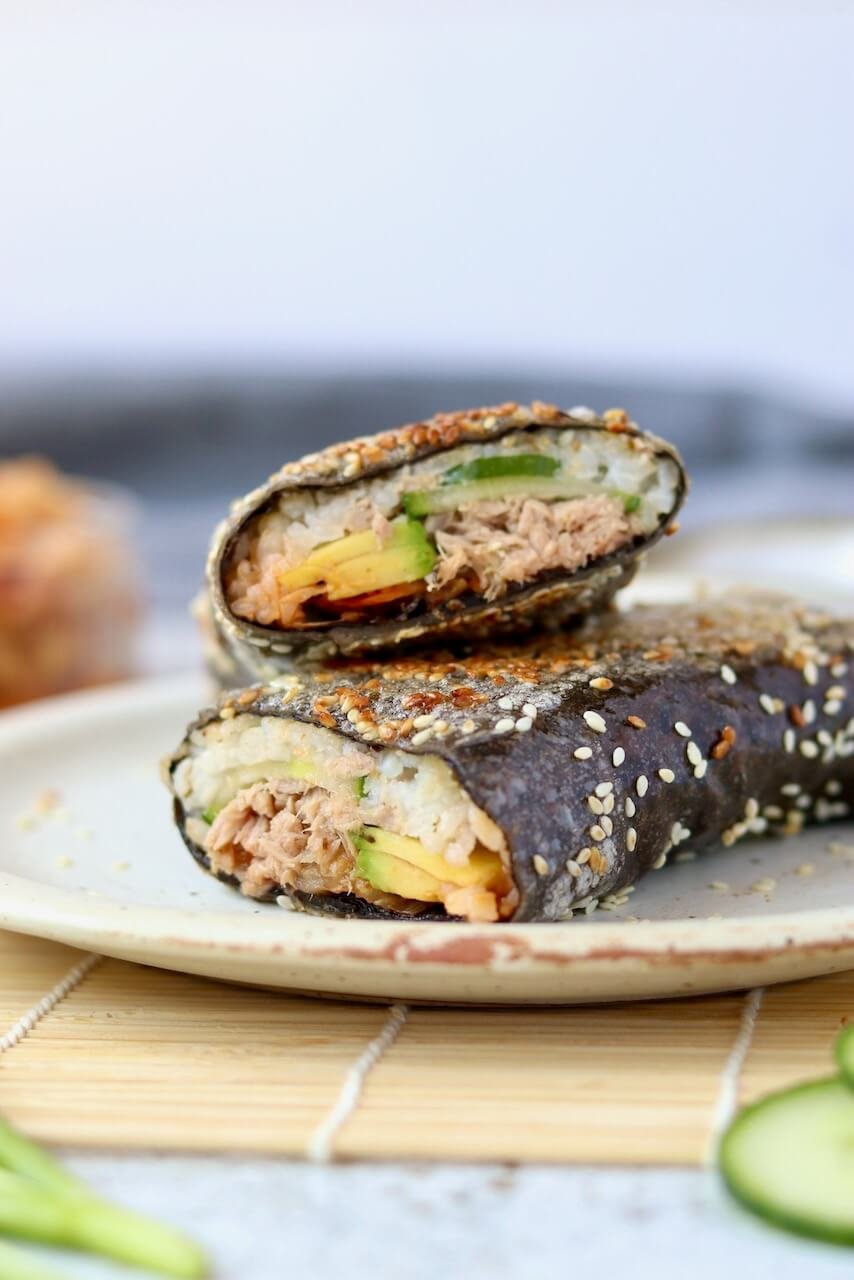


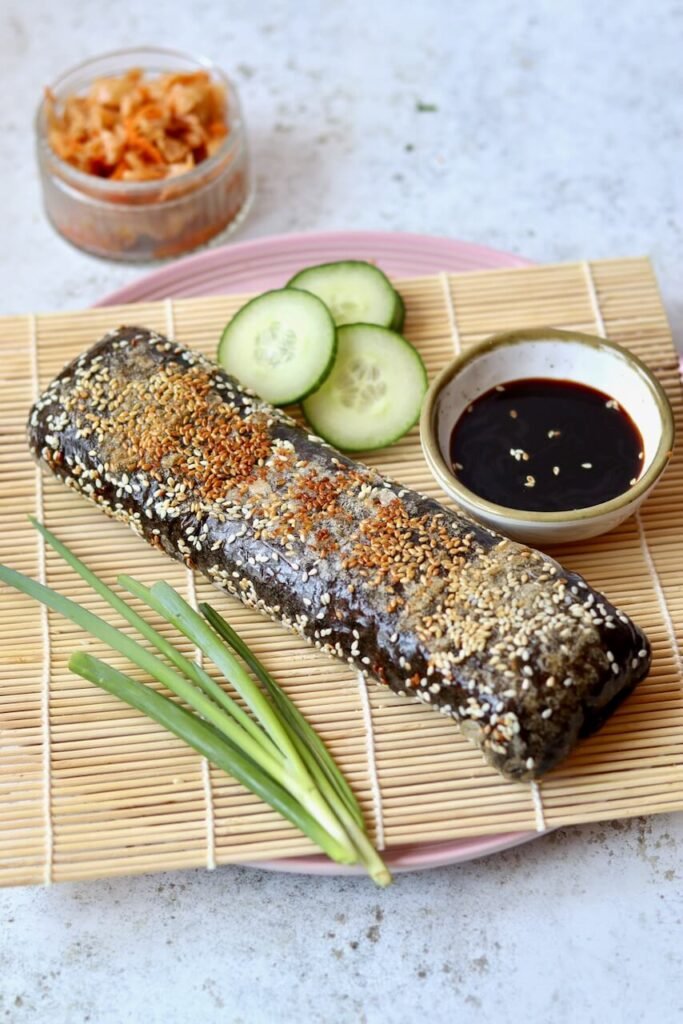
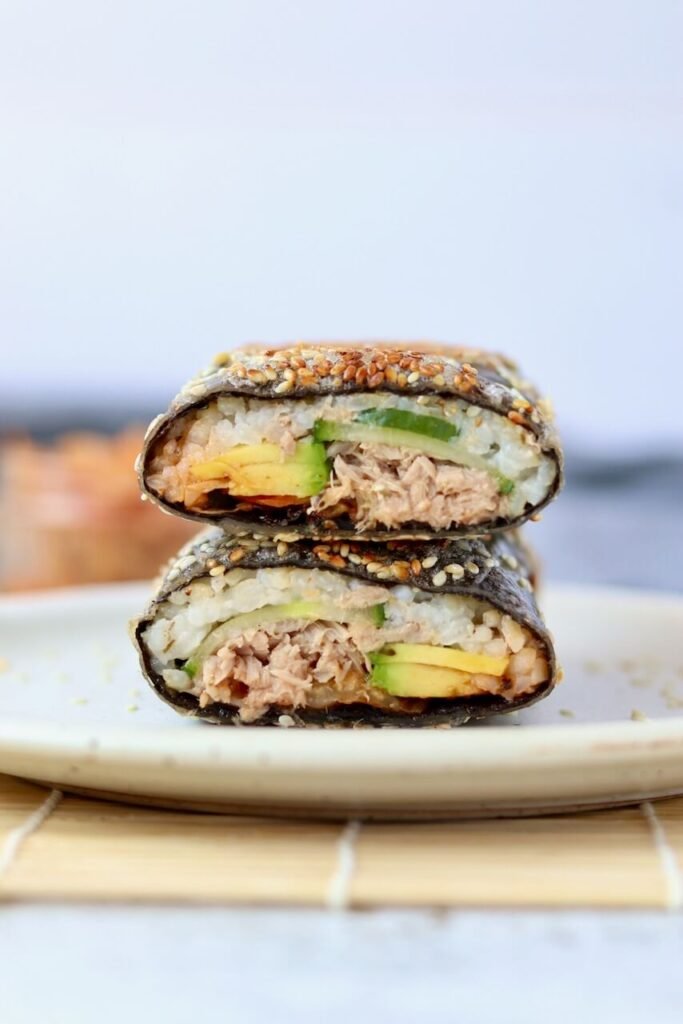
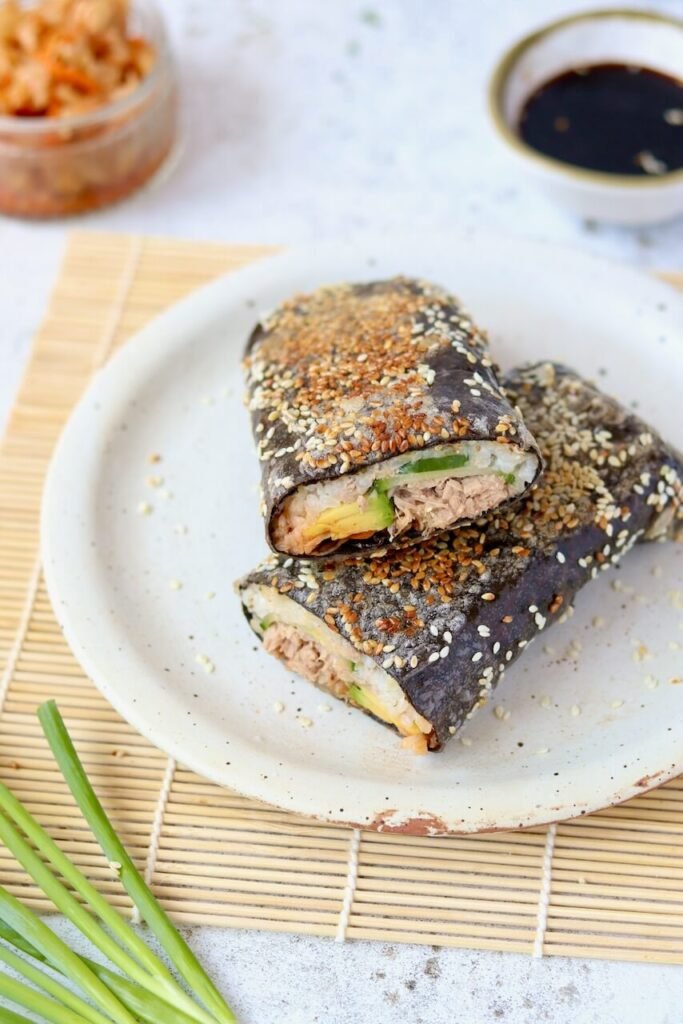
A Rice Paper Sushi Burrito is a large, hand-held sushi roll made by layering rice paper and seaweed, filling with sushi rice, tinned tuna, cucumber, avocado slices, and kimchi, then rolling tightly and pan-frying until crispy. It provides approximately 472 kcal and 30g of protein, makes one large serving, is naturally gluten-free, and uses no raw fish.
The sushi burrito trend has been everywhere for a few years now, but most versions still rely on a thick seaweed wrap that can be tricky to roll tightly and even trickier to eat without it falling apart. This Rice Paper Sushi Burrito solves both problems by layering rice paper underneath the nori, then pan-frying the whole thing until crispy. The result is a genuinely sturdy, satisfying, restaurant-quality burrito you can make entirely at home, with no raw fish required. As a certified nutrition coach, I love recipes like this one that combine bold flavour with a seriously impressive protein count in a single hand-held meal.
In this post you’ll learn:
- What makes a sushi burrito different from standard rice paper sushi rolls
- Why layering rice paper under nori gives such a sturdy, crispy result
- How to customise the filling for different proteins and fresh veggies
For more high-protein ideas, browse the full High-Protein Recipes roundup →
What Is a Sushi Burrito?
A sushi burrito takes all the components of a classic sushi roll, rice, protein, vegetables, and sauce, and scales them up into a much larger format wrapped like a burrito rather than sliced into small individual pieces. The concept originated in California and has since spread widely, prized for being a more substantial, easy-to-eat version of sushi that works brilliantly as a complete meal rather than a starter or shared plate.
This version puts its own spin on the format by using rice paper as well as seaweed for the wrap, which gives a noticeably crisper, sturdier finish once pan-fried. It also swaps raw fish for tinned tuna, making it far more accessible for anyone who wants the sushi burrito experience without sourcing or handling raw fish at home. If you’ve made traditional Vietnamese rice paper rolls before, the rolling technique here will feel familiar, even though the filling and flavour profile are entirely different. For another rice paper recipe with a similar bold, fusion approach, take a look at my kimchi rice paper rolls.
Why This Rice Paper Sushi Burrito Works
The double layer of rice paper and seaweed is the real innovation here. Rice paper alone can be a little delicate once filled, and nori alone can be tricky to roll without tearing, especially around a generous filling. Together, layered slightly overlapping and rolled as one unit, they create a wrap that is genuinely sturdy enough to hold a substantial filling without falling apart, while still crisping up beautifully in the pan.
Tinned tuna is the protein backbone of this recipe, contributing close to 22g of protein from the tin alone. Sushi rice provides the familiar base you would expect from any sushi format, ideally seasoned with a touch of rice vinegar for that authentic tang, while cucumber and avocado slices bring freshness, creaminess, and a meaningful dose of healthy fats and fibre. Kimchi is the ingredient that sets this apart from a standard sushi burrito, adding a tangy, fermented depth that plays beautifully against the richness of the avocado and the umami of the tuna. A drizzle of sriracha and a generous coating of sesame seeds finish the whole thing with heat, crunch, and visual appeal.
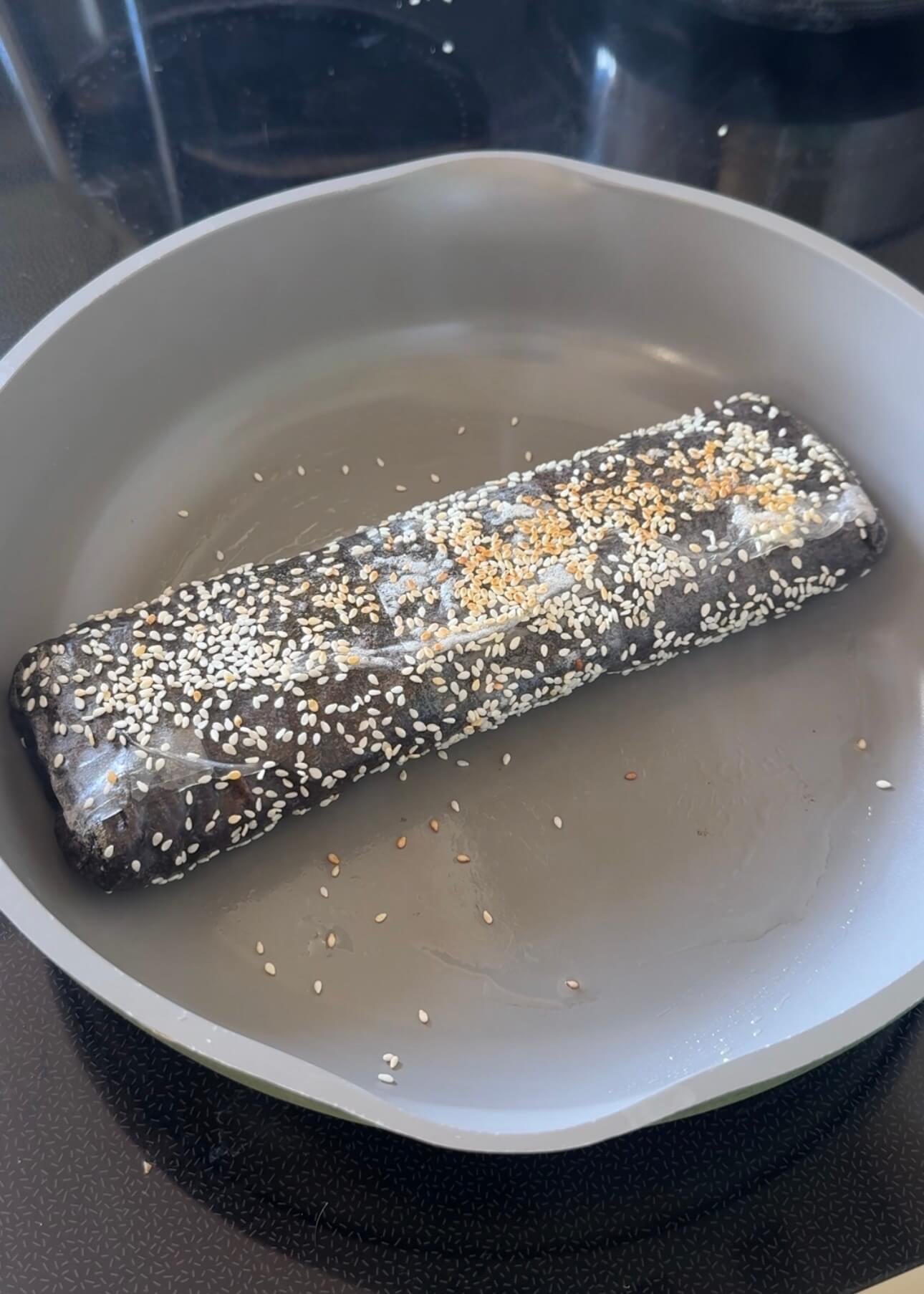
Pan-frying the assembled burrito until crispy is the final step that takes this from a good roll to a genuinely excellent one. The exterior crisps and browns while the filling inside stays cool and fresh, creating a satisfying contrast in both temperature and texture with every bite.
Nutrition Breakdown
(Per serving — whole burrito)
- Calories: ~472 kcal
- Protein: ~30g
- Carbohydrates: ~54g
- Fat: ~16g
- Fibre: ~8g
This is a genuinely complete, well-balanced meal in a single hand-held format, and naturally gluten-free given that rice paper, seaweed, sushi rice, and tinned tuna contain no gluten. The protein content is excellent for a lunch or dinner option, and the fibre from the avocado, cucumber, and kimchi means this burrito digests slowly and keeps you satisfied for hours. The sodium content is worth being mindful of, given the combination of kimchi, sriracha, and seaweed, all of which naturally contribute salt.
Coaching insight: This is a great example of a meal that feels indulgent and fun to eat while still delivering serious nutritional substance. The 30g of protein alongside 8g of fibre makes this a genuinely satisfying option rather than something you will be hungry again from an hour later.
Note: All nutrition values are estimates calculated using Vilgain Tuna in Brine and Vilgain Korean Kimchi. Values will vary with different brands, particularly in sodium content. Always check your soy sauce and condiments if a strictly gluten-free diet is required. Always verify with your preferred nutrition calculator.
Ingredients
(Makes 1 large burrito)
- 2 rice paper sheets
- 2 nori (seaweed) sheets
- 1 tin tuna (120g, Vilgain recommended)
- 80g cooked sushi rice (seasoned with a splash of rice vinegar if you like)
- ¼ cucumber, sliced
- ½ Hass avocado, cut into avocado slices
- 3 tbsp kimchi (Vilgain recommended)
- 1 tbsp sriracha, to drizzle
- Sesame seeds, to coat
Smart Substitutions
- Tinned tuna: Cooked and cooled salmon, prawns, or shredded chicken all work well as alternative proteins
- Sushi rice: Brown sushi rice for extra fibre; cauliflower rice for a lower-carb version; add a splash of rice vinegar for a more authentic sushi rice flavour
- Fresh veggies: Carrots, julienned, or a handful of beansprouts can be added alongside the cucumber for extra crunch and colour
- Kimchi: Any brand works, though sodium and spice levels vary considerably
- Sriracha: Gochujang or a chilli mayo as an alternative drizzle
- Avocado: Mango for a sweeter contrast against the savoury filling
If you’re adjusting based on your goals: using brown sushi rice instead of white adds approximately 2g of extra fibre; swapping tuna for salmon adds approximately 30–40 kcal and a small amount of extra fat from the omega-3 content.
Customisation Options
Salmon Sushi Burrito
Swap the tuna for cooked, cooled salmon for a richer, slightly fattier alternative that pairs beautifully with the same kimchi and sriracha combination.
Loaded Veggie Version
Add julienned carrots and a small handful of beansprouts alongside the cucumber for extra fresh veggies and crunch, similar to the filling you would find in a Vietnamese rice paper roll.
Spicy Mayo Version
Mix the sriracha with a tablespoon of light mayonnaise before drizzling for a creamier, spicy mayo finish that is a classic sushi burrito addition.
Vegetarian Version
Replace the tuna with extra avocado slices, a few slices of marinated tofu, or edamame beans for a fully vegetarian burrito that still delivers a meaningful protein count.
Bowl Version
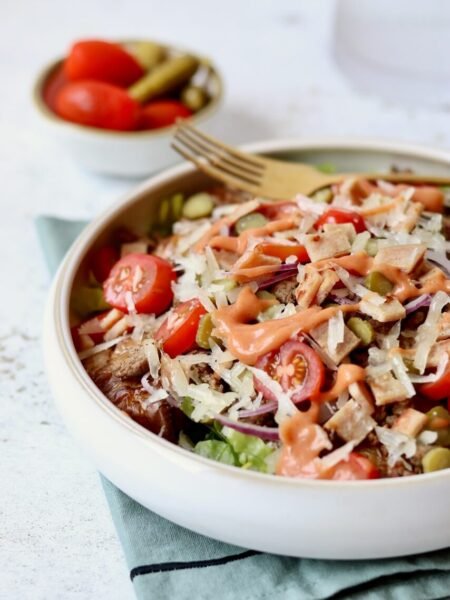
If you would rather skip the rolling altogether, simply layer all the ingredients in a bowl for a deconstructed sushi burrito bowl. It loses the crispy pan-fried exterior but is a quick, easy snack or lunch when you are short on time.
Air Fryer Version
Instead of pan-frying, brush the assembled burrito lightly with oil and air fry at 200°C for 5 to 6 mins, turning halfway, for an even crispier finish with less hands-on attention.
Storage
This burrito is genuinely best eaten fresh, ideally straight after pan-frying while the exterior is still warm and crisp. The combination of rice paper and seaweed does not hold up well once cooled and stored, becoming tough and losing its texture.
If you do need to prepare ahead, assemble the burrito and keep it wrapped tightly in cling film in the fridge for up to a few hours before pan-frying just before serving. Do not freeze — none of the components hold their texture well after freezing and thawing.
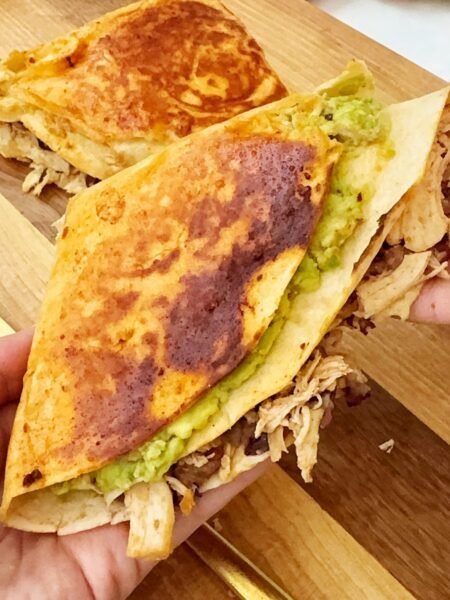
For another high protein, hand-held snack or lunch idea, take a look at my rice paper cheeseburger rolls.
How This Fits Into a Balanced Diet
This Rice Paper Sushi Burrito is a brilliant example of a fun, novel format that still delivers genuine nutritional substance. At 472 kcal with 30g of protein and 8g of fibre, it works as a complete, satisfying lunch or dinner that does not require any compromise between enjoyment and nutrition, and it is naturally gluten-free for anyone who needs to avoid gluten.
As a nutrition coach, I love recommending recipes like this one to clients who feel like “healthy eating” has to mean boring or restrictive. A crispy, pan-fried burrito packed with tuna, avocado, kimchi, and a drizzle of sriracha proves that is simply not true. For more high protein lunch inspiration, take a look at my high protein lunch ideas.
Final Thoughts
This Rice Paper Sushi Burrito brings together two food trends, the sushi burrito and crispy rice paper, into something genuinely satisfying and a little bit different from anything else in your usual lunch rotation. No raw fish, no specialist sushi-making skills required, just bold flavours and fresh veggies rolled tightly and pan-fried until golden.
Make it once and you will find yourself experimenting with different fillings every time. Subscribe to my blog and get my free weekly meal planner templateto build more creative, balanced meals like this one into your week with ease.
Alex 🙂
Rice Paper Sushi Burrito (High-Protein, Crispy, No Raw Fish)
A crispy, hand-held sushi burrito made by layering rice paper and seaweed around sushi rice, tinned tuna, cucumber, avocado slices, and kimchi, then pan-frying until golden. No raw fish required, naturally gluten-free, and finished with a sriracha drizzle and a sesame seed coating.
Ingredients
Instructions
-
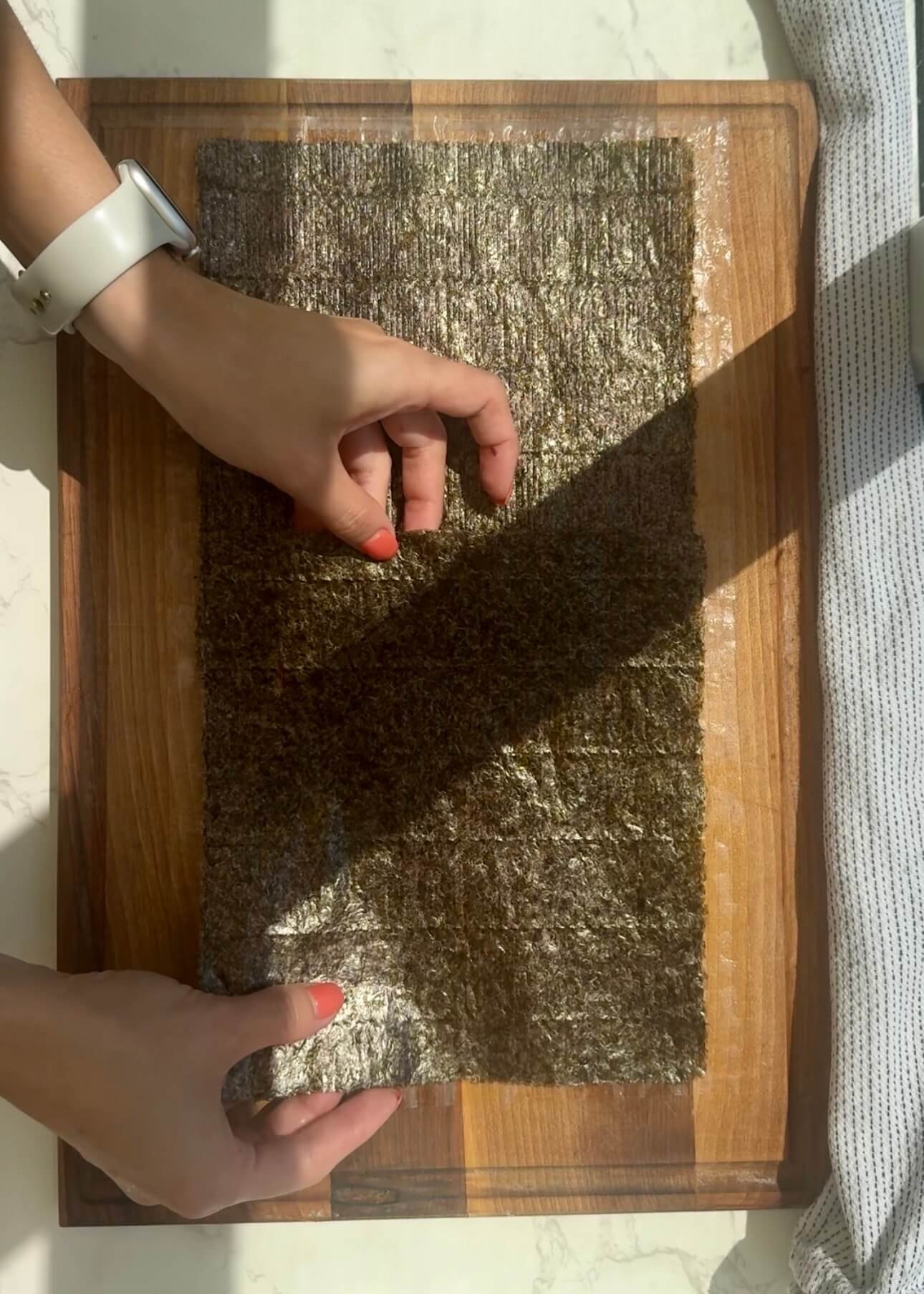
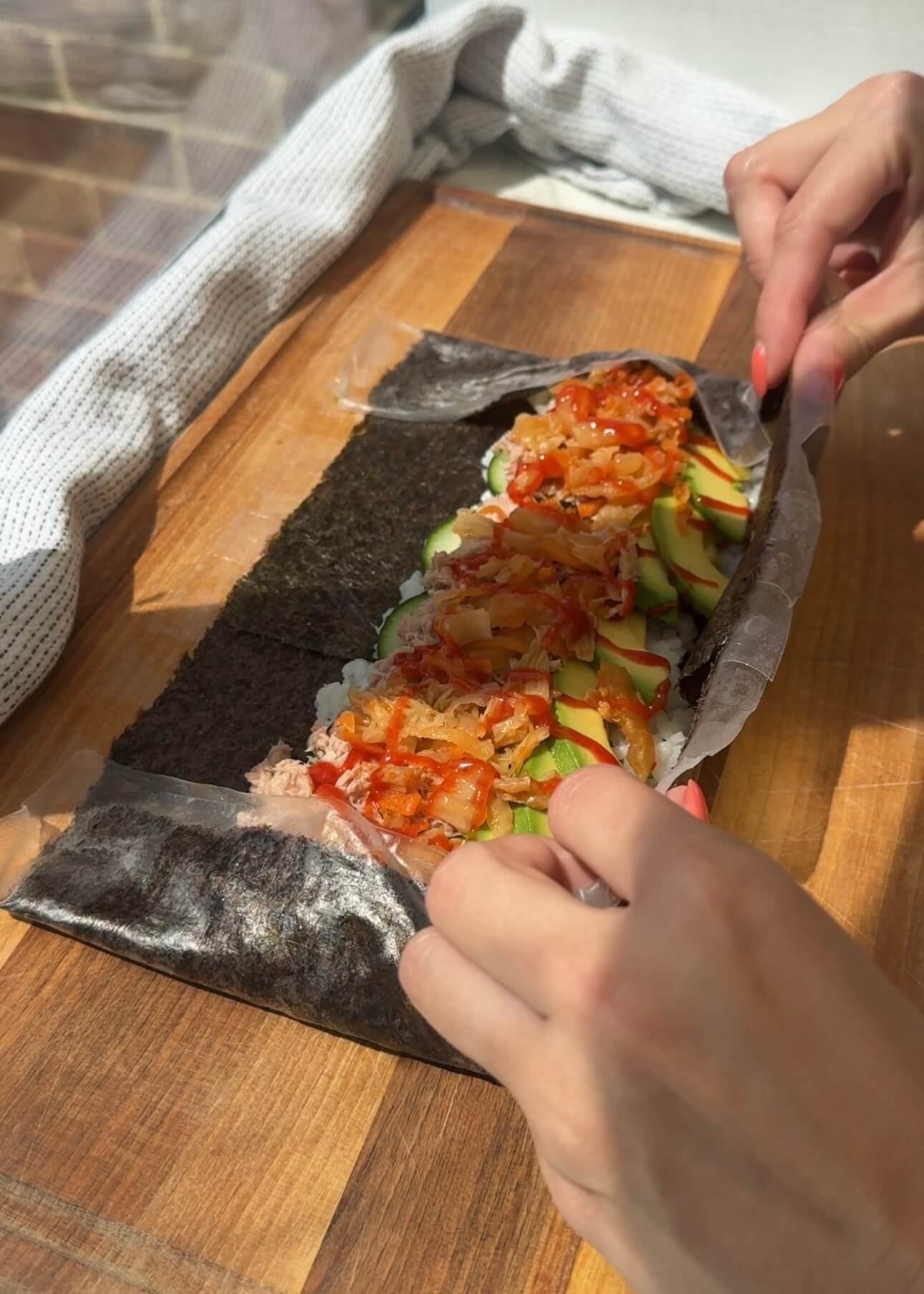
Hydrate the rice paper sheets in cold water and lay them slightly overlapping on a flat surface.
-
Place the nori sheets on top, also slightly overlapping on one side.

-
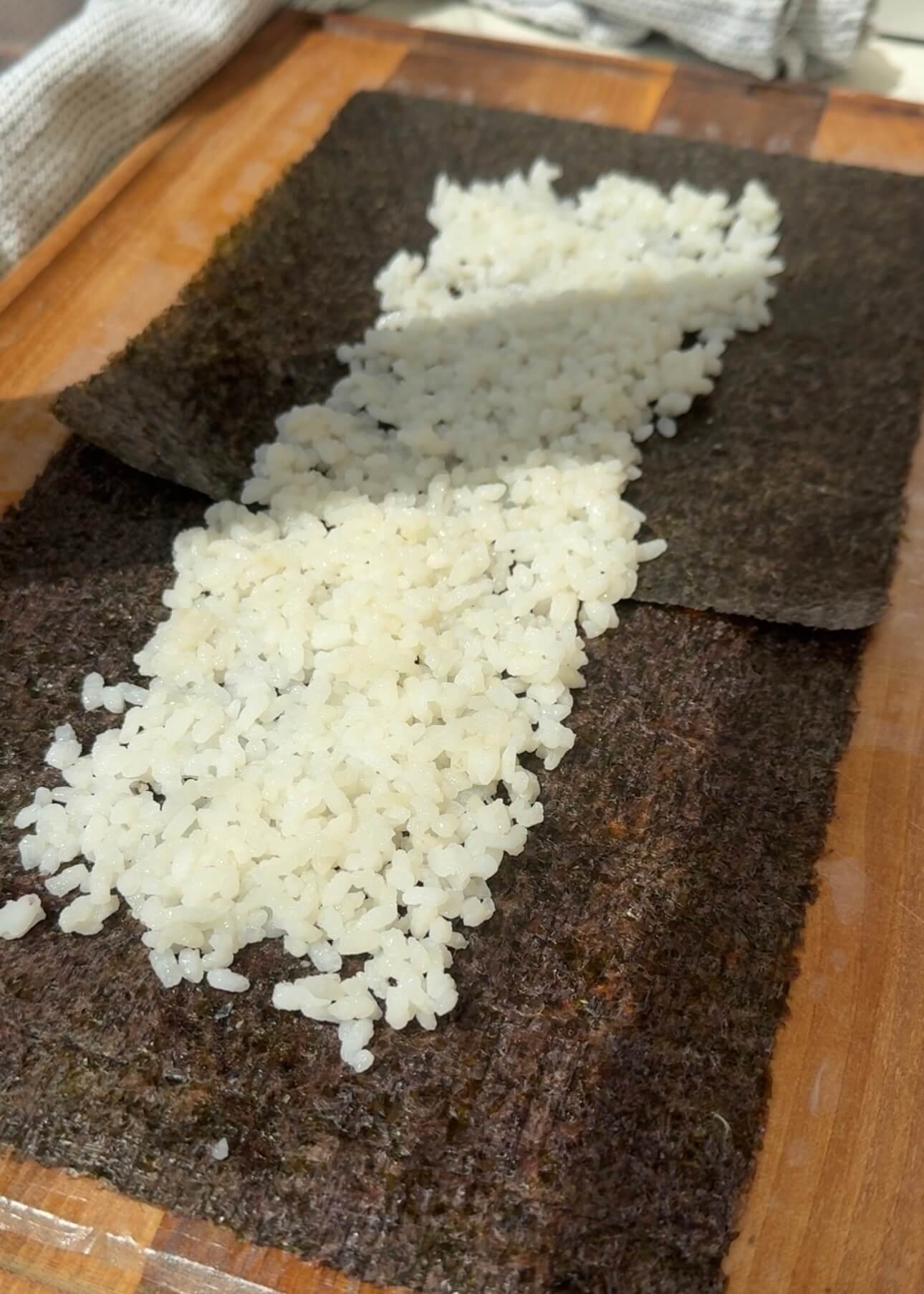
Spread the cooked sushi rice along the middle of the layered wrap.
-
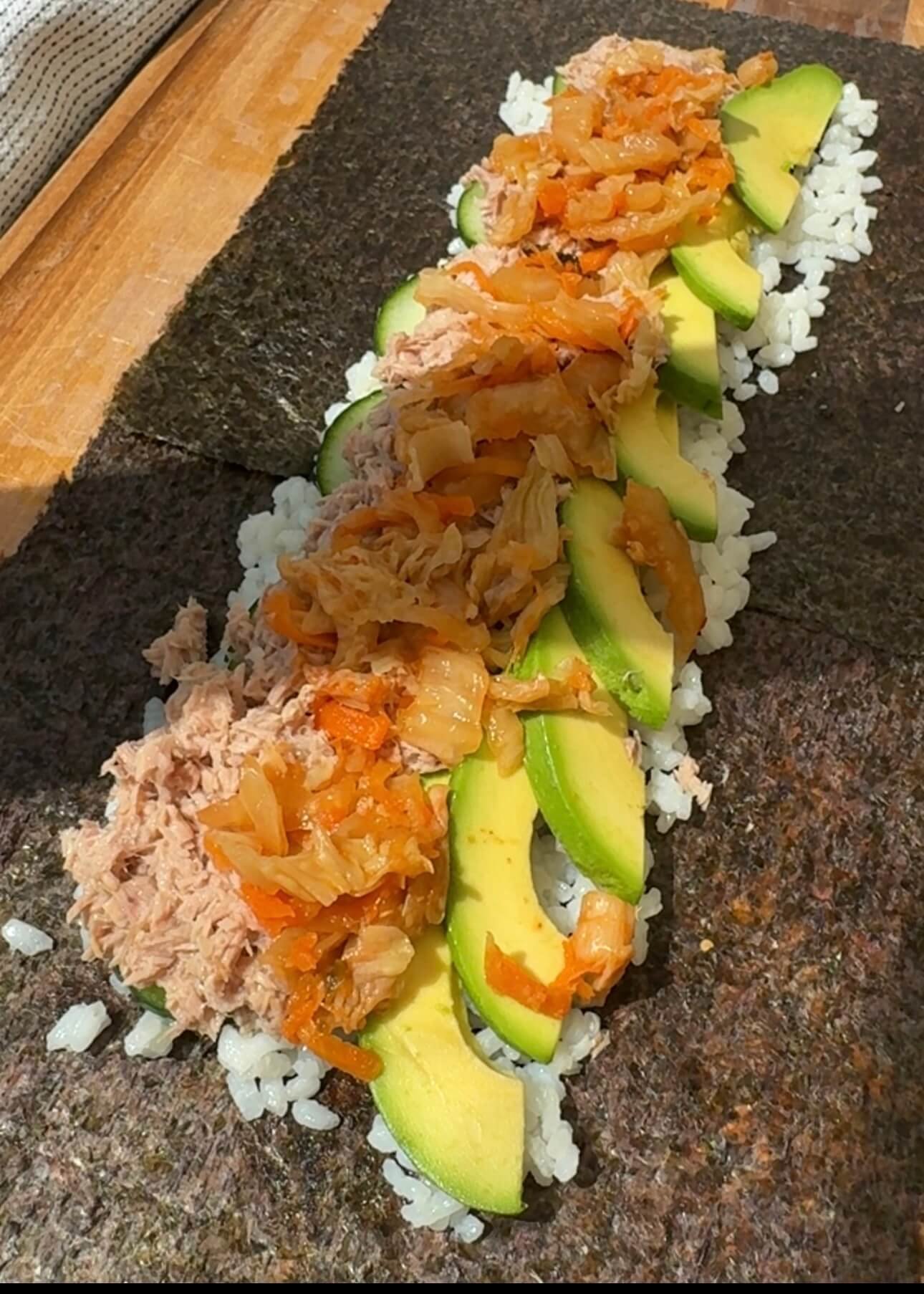
Add the sliced cucumber, tuna, kimchi, and avocado on top of the rice.
-
Roll the short sides of the rice paper in first, then fold one long end and roll tightly like a burrito, fully enclosing the filling.
-
Coat the outside in sesame seeds and pan-fry over medium heat until golden and crispy on all sides.
-
Serve immediately with a drizzle of sriracha and tamari (soy sauce) on the side.
Nutrition Facts
Nutrition Facts
Servings: 1 ServingCalories:472kcalTotal Fat:16gSaturated Fat: 3gSodium:890mgTotal Carbohydrate:54gDietary Fiber: 8gSugars: 5gProtein:30g
Note
- Work on a clean, slightly damp flat surface to prevent the rice paper sticking
- Roll tightly to avoid the filling spilling out during frying
- Pan-fry over medium heat, not high, to crisp evenly without burning the rice paper
- Add julienned carrots or other fresh veggies to the filling for extra crunch
- Naturally gluten-free, but check soy sauce and condiments if strictly avoiding gluten
- Best eaten immediately while crispy and warm
- Macros calculated using Vilgain Tuna in Brine and Vilgain Korean Kimchi, sodium will vary with different brands