Trying to eat “healthy” can feel overwhelming, especially when there’s so much conflicting advice about what you should or shouldn’t eat. One plan says cut carbs, another says eat more fat, and somewhere in between it all, things get confusing.
The reality is, healthy eating doesn’t need to be complicated. In fact, one of the most effective ways to improve your nutrition is by learning how to build a balanced plate, without tracking calories or following strict rules.
As a certified nutrition coach, I focus on helping people create simple, sustainable eating habits. And understanding how to structure your meals is one of the easiest ways to feel more in control of your nutrition.
In this post you’ll learn:
- What a balanced plate actually looks like in practice
- How to build meals without tracking calories
- How to make your meals more satisfying and sustainable
What Is a Balanced Plate?
A balanced plate is a simple way of structuring your meals so they include a mix of protein, carbohydrates, fats, and fiber. Each of these plays a role in supporting energy, fullness, and overall nutrition.
Rather than focusing on eliminating foods or following rigid meal plans, this approach is about combining foods in a way that helps you feel satisfied and nourished.
It’s not about perfection, it’s about creating meals that work for your body and your lifestyle.
Why Balance Matters More Than Perfection
One of the biggest mistakes people make is trying to eat perfectly. This often leads to restrictive habits that are difficult to maintain long term.
A balanced approach works better because it focuses on consistency rather than extremes.
Meals that include protein, fiber, and healthy fats tend to:
- Help you feel fuller for longer
- Support more stable energy levels
- Reduce the likelihood of constant snacking
Research suggests that combining these nutrients can improve satiety, which may help you naturally regulate how much you eat, without needing to track everything.
The Simple Balanced Plate Formula
Instead of counting calories or macros, you can use a simple visual method to build your meals.
Think of your plate in three main parts:
1. Protein (the anchor of your meal)
Protein helps support fullness and plays an important role in maintaining muscle.
Examples include:
- Chicken, fish, or lean meat
- Eggs
- Greek yogurt
- Tofu or beans
2. Carbohydrates (your main energy source)
Carbs provide fuel for your body and brain.
Examples include:
- Rice, pasta, or potatoes
- Bread or wraps
- Fruit
- Whole grains
3. Fats and Fiber (for satiety and nutrients)
These help slow digestion and keep meals satisfying.
Examples include:
- Vegetables
- Olive oil
- Avocado
- Nuts and seeds
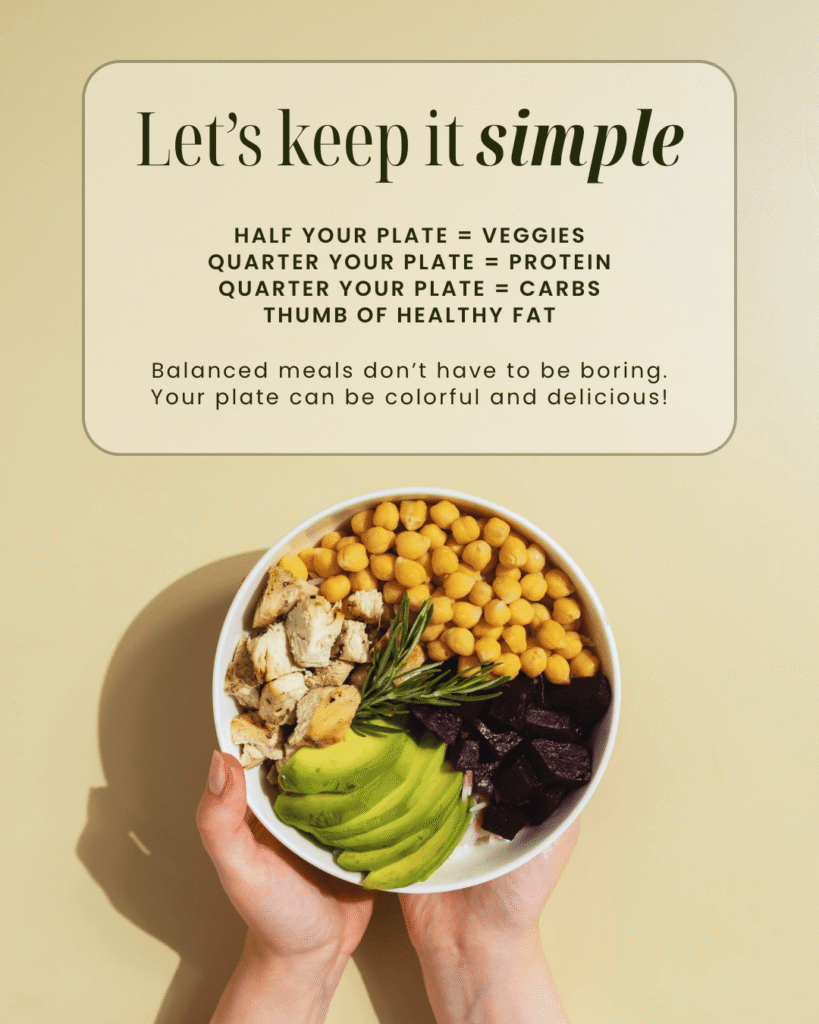
👉 A simple way to visualise this:
- ¼ plate protein
- ¼ plate carbohydrates
- ½ plate vegetables, plus a source of fat
No weighing, no tracking, just a flexible structure you can repeat daily.
What This Looks Like in Real Meals
Balanced eating doesn’t require complicated recipes. It can be built from simple, everyday foods.
Breakfast:
Greek yogurt with fruit and seeds
Lunch:
Chicken wrap with salad and dressing
Dinner:
Salmon, rice, and roasted vegetables
Snack:
Boiled eggs, yogurt, or a simple protein-based snack
These meals aren’t perfect—and they don’t need to be. They’re just structured in a way that supports fullness and energy.
Common Mistakes to Avoid
Even with a simple approach, there are a few common pitfalls:
- Skipping protein → often leads to feeling hungry soon after eating
- Avoiding carbs completely → can reduce energy and satisfaction
- Overcomplicating meals → makes consistency harder
- Trying to be perfect → leads to all-or-nothing thinking
A balanced plate is meant to simplify things, not make them more rigid.
Try My favourite balanced Meals



How This Fits Into a Balanced Diet
A balanced plate is a tool, not a strict rule.
Some meals will naturally be more balanced than others, and that’s completely normal. What matters most is your overall pattern across the day or week.
This approach allows for flexibility, enjoyment, and real-life eating situations, which makes it far more sustainable long term.
FAQs
What is a balanced plate?
A balanced plate includes a mix of protein, carbohydrates, fats, and fiber to support energy and fullness.
Do I need carbs in every meal?
Not necessarily, but including them can help improve energy and satisfaction for most people.
How much protein should I include?
A palm-sized portion per meal is a simple and practical guideline.
Can I lose weight eating balanced meals?
A balanced approach may support weight management by helping regulate hunger and improving consistency.
What if my meals aren’t perfectly balanced?
That’s completely fine—focus on overall habits rather than individual meals.
Final Thoughts
Eating well doesn’t have to involve strict rules, tracking apps, or complicated plans.
By focusing on building balanced plates, you create a simple framework that can help support your goals while still allowing flexibility and enjoyment.
Over time, these small, consistent habits can make a meaningful difference—without the stress of trying to be perfect.
👉 Want more support? Healthy eating shouldn’t feel confusing, restrictive, or overwhelming. Mindfully Eating is your practical guide to building healthy habits that fit real life, without dieting, guilt, or perfection. Download it here!