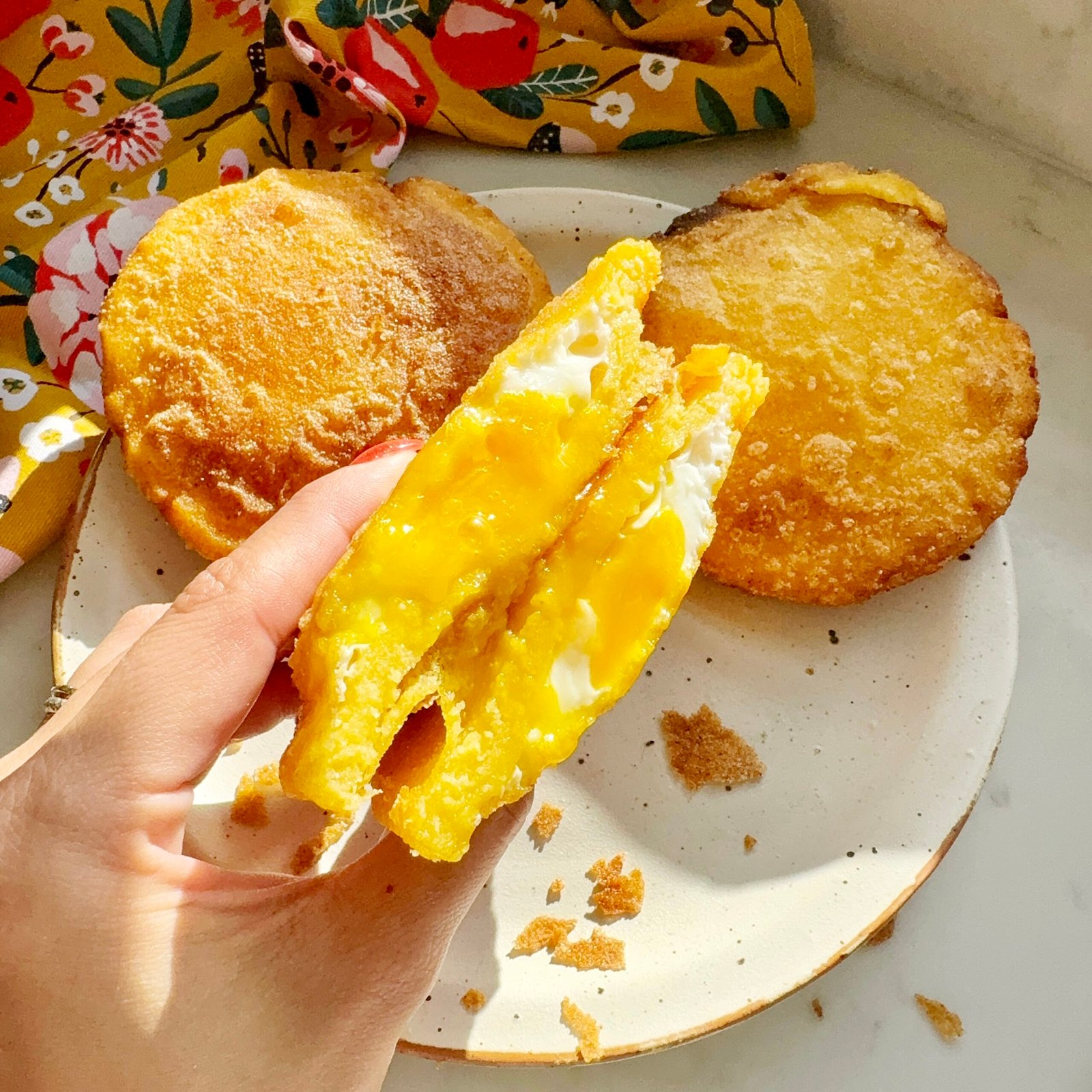
Arepa de huevo is one of the most iconic and beloved street foods in Colombia, especially along the vibrant and lively Caribbean coast. If you’ve ever wandered through the bustling streets of Cartagena or Barranquilla in the early morning, the aroma of freshly fried arepas de huevo drifting through the air is impossible to resist. Crispy on the outside, soft on the inside, and filled with a perfectly cooked egg, they’re a true celebration of simple ingredients turned into something unforgettable.
Traditionally enjoyed as street food, these golden arepas are also a staple for breakfast, a satisfying lunch, or an anytime snack when you crave something comforting and hearty. Their preparation is wonderfully unique: a dough made from yellow maize is shaped and fried, then carefully opened to tuck in a raw egg before being sealed and fried again. The result is a warm, savory pocket of pure Colombian flavor. Buen provecho!
Ingredients
-
1 cup (120 g) maize flour — yellow pre-cooked cornmeal (Harina de Maíz Precocida)
-
1 cup (240 ml) water
-
1 tsp (5 g) salt
-
4 eggs
-
Vegetable oil for frying (about 500 ml / 2 cups, depending on pan size)
Method
-
Make the dough. In a large bowl, sprinkle the maize flour and salt, then slowly add the water while stirring with a spoon (or your hand). Work it until the mixture comes together into a soft, slightly tacky dough — not dry, not soupy. If it feels too stiff, add a tablespoon of water; if too wet, dust a little more flour.
-
Portion and shape. Divide the dough into four even pieces. Roll each portion into a smooth ball, then flatten it between two sheets of cling film (or in your palms) until it’s roughly ½ cm thick and the edges look tidy. Keep a small bit of dough to one side — you’ll use it to seal the arepas after adding the egg.
-
First fry — get a golden crust. Heat about 1–1.5 cm of vegetable oil in a deep frying pan over medium heat. When the oil is hot (you should see gentle ripples), carefully slide an arepa in. Fry until the outside is a beautiful deep-golden color and crisp to the touch, about 2–3 minutes per side — adjust timing to your stove. Transfer to a paper towel-lined plate to cool just enough to handle.
-
Fill with the egg. Take a cooled arepa and, holding it steady, cut a neat sideways hole or create a pocket without cutting all the way through. Crack an egg into a small ramekin first — this helps avoid shells and gives you a chance to check the egg — then gently pour the egg into the arepa’s cavity. Use the reserved dough to patch and seal the opening, pressing the edges so the egg won’t leak.
-
Second fry — cook through. Carefully return the stuffed arepa to the hot oil, seam-side up at first to set the seal, then turn so it fries evenly. Cook for another 3–5 minutes until the egg inside is set and the outside is deep-golden and crisp. Keep the heat moderate: you want the interior to cook without burning the crust.
-
Drain and rest. Remove the arepa from the oil and let it rest briefly on paper towels to drain excess oil. Give it a minute so the interior finishes setting — bite too soon and the yolk can run everywhere!
-
Serve warm and enjoy. Plate your arepa de huevo while it’s still warm so the crust stays crisp and the interior is comforting and soft. These are perfect with a squeeze of lime, a bit of hot sauce, or simply on their own. Buen provecho!
Tips
-
Use pre-cooked maize flour: Look for brands like P.A.N. or Areparina. Regular cornmeal won’t hydrate the same way.
-
Consistency is key: The dough should feel soft and pliable, similar to Play-Doh. If it cracks when shaping, add a splash of water; if it sticks to your hands, add a bit more flour.
-
Flatten evenly: Thicker spots can cause uneven frying or make it harder to fill with the egg. Aim for a uniform ½ cm thickness.
-
Don’t skip the ramekin step: Cracking the egg into a small bowl first avoids mess, shell fragments, and makes pouring much easier.
-
Seal well: Pinch that extra bit of dough firmly over the opening before the second fry to prevent leaks.
-
Mind the oil temperature: Too hot and the outside browns before the egg cooks; too cool and the arepa absorbs oil. A steady medium heat works best.
-
Fry one at a time (if possible): This gives you better control and avoids crowding, which lowers the oil temperature.